Friday, May 30, 2014

Tehran’s Surrealistic Muralist

"Life Cycle" by Mehdi Ghadyanloo

“Never underestimate the power of colors and how they can bring life to old walls and buildings,” remarks a correspondent for Iran’s PressTV in an April 2012 report on the increasing ubiquity of urban artwork on the streets, walls, and façades of Tehran. While Iranian municipalities have long devoted so-called resources to “urban beautification” projects such as public parks and massive murals promoting patriotism and religious solidarity, the past decade has seen a substantial rise in both the prevalence and popularity of creative street art, both commissioned and independent.

Iranian artists have spent years transforming Tehran’s banal cityscapes of graying concrete and cracking plaster into vibrant and innovative public spaces bursting with color, imagination, and vision through sculpture, painting, graffiti, and tile and metal work. Where there were once mostly looming murals of religious leaders and martyred soldiers, Ajam Media Collective editor Rustin Zarkar writes, “Iranian streets have been increasingly decorated with classical poetry, mosaic patterns, landscapes, and an array of other images with roots in the traditional Iranian arts and experimental urban design.”

Four years ago, while on a trip to Iran, I took a stroll down Enghelab Avenue to visit some bookshops near the University of Tehran. Above the bustling sidewalks and traffic-jammed streets was an unremarkable building – like so many drab, imposing edifices in the capital erected in the middle of last century as part of Mohammad Reza Pahlavi’s modernization scheme - that nevertheless demanded attention. Huge walls were consumed by a colorful mural quite unlike the usual fare of revolutionary heroes and war memorials seen around town. I took a photo:

(Photo Credit: Nima Shirazi)

This was the work of artist and designer Mehdi Ghadyanloo, whose surrealistic murals combine elements of René Magritte, Giorgio de Chirico, M.C. Escher, Salvador Dalí, and many others. Ghadyanloo, who is only 33 years old, has been tripping out Tehran’s empty walls since 2006 as part of the city’s beautification project – promoted heavily for the past eight years by the managing director of the Tehran Beautification Organization, Seyed Mohammad Javad Shooshtari. To date, it is said that Ghadyanloo, who studied art and drawing in college and acquired a Master’s degree in animation, has produced over 100 murals. He even teaches a course on mural art at Tehran’s Soodeh University.

“My work in animation brought me to storytelling and exposed me to surreal short animations which really inspire the visual language which I use in my large scale urban murals today,” Ghadyanloo explained last year in an interview with the Young Persian Artists blog. He added:
The city is an architectural mishmash with buildings often having only one façade and the other three just left blank and grey. This doesn’t make for a beautiful city but it is a great environment for mural work. I think the municipality really felt the need to bring some cohesion or at least colour to the often confused and smog-smeared architectural face of the city.
Lately, Ghadyanloo’s amazing work has been gaining wider attention in the American press. Just this week, the Huffington Post described his whimsical images as “exaggerated dream sequences,” depicting “gravity-defying figures and portholes to other dimensions, all from altered perspectives that meld sky and structure.”

Though his large-scale municipal work is funded by the city of Tehran, Ghadyanloo identifies with the independent street art scene in Iran. He told HuffPost, “Graffiti is illegal here in Iran, like in many other countries, so graffiti artists in Tehran work at nights. We have very good underground street artist [network].”

Check out some of his work below and at the links above:

"Bolts"

"Silence"

"Aquarium"

"Emdad Khodro"

"Childhood Dreams"

"Folded Walls"

Below is a short video featuring some of Ghadyanloo’s artwork:

Video created by Az Kolexion ‘E London (AKL)

*****

Originally posted at Muftah.

*****

Friday, May 23, 2014

Iran’s Latest Drone Drops Life Preservers, Not Bombs


Earlier this month, during an exhibition at the Islamic Revolution Guards Corps (IRGC) Aerospace Forces’ Central Command in Tehran on May 11, Iranian military officials unveiled a domestically-produced reverse-engineered version of a sophisticated unmanned aerial vehicle (UVA), Lockheed Martin’s RQ-170 Sentinel stealth drone. The Iranian version comes about two-and-a-half years after one of the CIA’s RQ-170s – dispatched from a U.S. military base in Afghanistan – was downed and captured by Iran during a surveillance mission over the Iranian city of Kashmar, located 140 miles from the Afghan border. The IRGC subsequently extracted and decoded the video data stored by the aircraft and claims it brought down another American drone in February 2013.

According to an Iranian press report, the exposition “put on display the achievements of the IRGC Aerospace Forces in the design and development of drones, radars and defense systems as well as anti-ship, ballistic and anti-shield missile systems.” It also showcased other Iranian-made drones, such as the Shahed-129 and Shahed-125. Since 2010, Iran has periodically unveiled indigenously-manufactured models of drone aircraft capable of carrying out both “reconnaissance missions” and “combat operations.”

Just days later, however, another type of drone – one produced not by the IRGC, but rather a private Iranian innovative tech company called RTS Lab – was revealed by VICE’s Motherboard website. This drone isn’t designed to spy on foreign countries or drop bombs; instead, it saves lives. Motherboard reports:
We’ve seen how drones can be a crucial asset to search and rescue operations, but Iran’s RTS Lab has taken an entirely new angle. RTS’s Pars drone carries a payload of life preservers that can be delivered to a drowning swimmer far faster than a lifeguard. As we saw in testing in the Caspian Sea, the drone can also work at night, using bright lights, thermal sensors, and a built-in camera to stream video to rescuers on shore.
“At the moment, many people talk about ‘bad drones’ and drones that are spying and killing people. But I think everything has a good side and a bad side,” says RTS director Amin Rigi. “And they should see the good side that are drones that can save lives.”

Tehran-based RTS Labs was founded in 2010 by university students interested in competitive robotics, but is now an well-known technology firm with international contracts.

“We don’t believe in producing missiles and stuff will one day be used for destruction and killing people. We try our best to save people and build devices that can help,” Rigi says, citing his religious faith as inspiration, namely the Qur’anic verse (5:32), which declares that “whoever takes a life… it is as if he has killed all mankind; however, if anyone saves a life, it is as if he saved all mankind.”

Check out this awesome video, produced by Motherboard on location in Iran, to see the future of lifeguarding:


*****

Originally posted at Muftah.

*****

Thursday, May 22, 2014

The Pope, Palestine, and 'Price Tag' Profanity

Hate message reading, "Price tag, King David is for the Jews, Jesus is garbage" spray-painted on a Jerusalem church, May 9, 2014. (Photo credit: AFP)

Jodi Rudoren and Isabel Kershner had a longish piece about the Pope’s upcoming visit to Palestine (via Jordan) and then day trip in Israel: “Seeking Balance on Mideast Visit, Pope Pleases Few.”

The piece tries to establish that, with his planned itinerary, his poor Popiness can’t please everyone – or maybe even anyone – but reveals some things that are purposefully downplayed by the Grey Lady’s loyal lackeys.

Take this:
His Mass scheduled for Monday evening on Mount Zion, believed to be the site of both Jesus’ last supper and the tomb of King David, has ignited protests by religious Jews and drawn anti-Christian graffiti.
The pope’s refusal of bulletproof vehicles has also created some complications: Vatican officials said Francis had insisted on open-top cars to connect with the public, but the Israeli authorities responded by expanding the security perimeter, which will make it harder for people to glimpse the pontiff. And his short sojourn — the last two popes made eight- and seven-day trips — left the Galilee, home to many Christians and to Christian historic sites like Nazareth, off the itinerary.
While the link is there from one paragraph to the next, the truth is swept under the rug a bit. The reason why “Israeli authorities” have expanded “the security perimeter” has nothing to do with potential violence from Palestinians; rather, the threats of violence come solely from Israeli Jews.

Palestinians voice concern and disappointment with certain aspects of the trip; Omar Barghouti is frustrated that Pope Francis is to lay a wreath at Herzl’s grave, calling it "a nauseating, offensive act of complicity that Palestinian civil society cannot but condemn."

This sentence, however, reveals the sophomoric and petulant (or merely cruel?) nature of Zionism:
The pope’s decision to visit Herzl’s grave, 110 years after Pope Pius X harshly rejected Herzl’s appeal for support, is, for Israelis, a significant signal to offset his embrace of Palestine as a state.
And again, see who is angriest (and why) and who poses a potential threat to the Pontiff:
Monday’s Mass at Mount Zion has escalated a fight over the holy site. Christians, who have not been allowed to hold formal prayer services there other than a few times a year, want the last-supper room opened for liturgy daily from 6 to 8 a.m. Despite Israel’s insistence that no change in the regulations will be discussed during the pope’s visit, religious Jews plan to denounce such a change with a march Thursday night.
After a recent spate of hate crimes, the Israeli police on Wednesday issued restraining orders requiring that several right-wing Jewish activists stay away from the pope and Jerusalem’s Old City during the visit.
A recent Ha'aretz report further notes how Christian officials are increasingly concerned about the Pope's visit and the Christian community in Israel in general and includes a striking anecdote about Israeli police removing a welcome sign for the Pope from outside a Catholic Church and then citing some bogus reason for doing so. Church officials "question[ed] the fact that the police, instead of taking action against the extremists who paint hate slogans on mosques and churches, choose to remove a sign with a positive message that welcomes the pope in three languages."

"We hope the police will act with the same determination to prevent the growing incitement and violence against Christians," they said.

Hateful graffiti, care of right-wing Israelis, continues to appear on Christian churches around Israel and Palestine in advance of the Pope's high-profile visit.

Meanwhile, The ADL's outgoing leader Abe Foxman has written a lengthy op-ed decrying these "price tag" attacks and calling for Israeli (and, more generally, Jewish) vigilance again them. There's must to dissect in the piece, but his conclusion betrays the outrage: "It is not just a matter of protecting the victims of assaults and preventing vandalism of religious sites sacred to Christians and Muslims; it is a matter of living up to the ideals of the democratic and Jewish soul of the State of Israel."

What Foxman (and other like-minded Zionists) refuse to ever examine or admit is the sad fact that the insistence that a state of human beings, which should be governed by laws that protect equality and guarantee justice to all, have a "Jewish soul" - an inherently exclusivist and discriminatory concept, especially considering the indigenous people of that land are do not identify as Jewish - is precisely the impetus for price tag attacks in the first place. It is the very premise of Zionism, and that premise is inherently and explicitly anathema to equality and democracy.

This aspiration was expressly articulated by David Ben-Gurion in a 1937 letter: "What we want is not that the country be united and whole, but that the united and whole country be Jewish."

Without first dismantling this mindset, Foxman and his ilk will do nothing to stop the vitriol or the violence. Meanwhile, the non-Jewish communities and populations under Israeli authority from the river to the sea - Palestinians, Africans, migrant workers and refugees - will continue to pay the price.

Meanwhile, here’s some of what the Pope will be doing in Palestine:
[C]hildren from Bethlehem’s refugee camps will sing him two songs during a 15-minute stop at a community center, where organizers were told the pope would have time to shake only three hands.
“I negotiated with them for 15 minutes; they spoke about 10 minutes,” said Mohammed K. Lahham, a Palestinian lawmaker who also met Popes Benedict and John Paul II, and who as a boy of 9 was among the throngs greeting Pope Paul VI in Manger Square. “Frankly, even if he comes just for seconds and leaves, it’s important. It’s an S.M.S. message for the whole world.”
Isn’t it curious as to why the more diverse and downtrodden are welcoming his visit, while the vitriolic, insular, garrisoned colonizers are so enraged?

Perhaps it's because, when traveling through the Holy Land, Pope Francis will surely remember the supposed words of his savior and bless the meek, those who hunger and thirst after justice, and those who are persecuted for justice's sake. It's pretty clear that the nuclear-armed settler state isn't the one eventually inheriting the earth (annexation and occupation isn't the same thing) and there is certainly no confusing them with the peacemakers, who, according to the region's most famous son, shall be called the children of god.

*****

A shorter version of this post was published at Mondoweiss on May 25, 2014.

*****

Friday, May 16, 2014

Iranian Students Continue to Face Discrimination from U.S. Sanctions


Iranian students, studying in the United States and reliant on Bank of America debit cards and ATMs for access to their foreign bank accounts, have recently had their assets frozen. According to Ryan Costello and Jamal Abdi of the National Iranian American Council (NIAC), “Due to a sudden, unnecessary and — most of all – discriminatory change in bank policy, Iranians and Iranian Americans across the country suddenly try to use their debit cards to make a purchase or withdraw money from an ATM, only to find that their accounts have been frozen effective immediately.” Furthermore, “When they try to get answers from the bank, they are often subject to a Kafkaesque bureaucratic run-around before a person with proper clearance is found, at which point the process begins anew.”

The arbitrary, opaque, and ultimately discriminatory nature of many of the United States’ sanctions provisions on Iranian institutions and Iranians themselves is nothing new. In 2012, consumers of Iranian ancestry – real or perceived – were subject to ethnic profiling and explicitly prevented from purchasing products from Apple retailers across the country. Restrictions on Apple sales to customers planning to bring these products to Iran were only lifted last August.

Earlier this year, the online education company Coursera ceased offering courses to Iranians due to the same “export control regulations” imposed on businesses by the U.S. government, proscribing services to sanctioned jurisdictions. The U.S. Treasury’s Office of Foreign Assets Control (OFAC), the agency that implements economic sanctions, subsequently issued a regulatory exemption known as General License G, designed to ease academic exchanges between Iran and the United States, including “the provision of scholarships to Iranian students, Iranian participation in online courses, and Iranian participation in university entrance and professional certification examinations,” according to sanctions expert Erich C. Ferrari.

Nevertheless, even with some sanctions relief resulting from the multilateral nuclear accord signed by Iran and six world powers last year, myriad problems remain. As Ferrari points out, U.S. law still “prohibits the debiting or crediting of an Iranian account, therefore all transactions must be routed through foreign financial institutions. The problem is that both domestic and foreign financial institutions have been skittish about processing any Iran-related transactions, even when they are clearly authorized by OFAC.” He notes that even banks who have express authorization from the U.S. government to conduct business with Iranian banks are still hesitant to do so.

“Some banks are willing to play a part here. But not all of them. There are a lot of big banks that have been subject to fines for engaging in transactions that were in violation of U.S. sanctions that aren’t willing to do anything – even humanitarian,” a U.S. official recently told Reuters. The victims of such policies continue to be the Iranian people, whether suffering from shortages of medical supplies at home or, in these recent cases, having their bank accounts frozen abroad.

Costello and Abdi explain:
The justification for this discriminatory and damaging policy lies in an over enforcement of U.S. sanctions law. Under extensive financial sanctions that have cut off Iran’s financial sector from the United States, U.S. banks cannot provide any services or permit accounts from being accessed within Iran. Many Iranians and Iranian Americans know these restrictions and are careful to ensure that they do not access their accounts when visiting Iran.
Nevertheless, Bank of America has employed a scorched earth approach to ensuring sanctions compliance: freezing domestic accounts with little to no warning for weeks at a time until they obtain additional documentation. These freezes are simply not necessary under U.S. sanctions law and solely rely on the legally questionable and ethically problematic justification of national origin. By contrast, many other banks simply request the documents and allow their customers to continue to access their accounts from the U.S. while they review and assess the risk of the customer running afoul of financial sanctions.

Meanwhile, over the past year, European sanctions imposed on Iranian banks and businesses have been collapsing in courts, due to their “irrational” and “arbitrary” implementation and reliance on secret evidence. In September 2013, a European Union court quashed sanction on seven Iranian companies, including four banks, rejecting arguments that they were acting as front companies to bypass the punitive measures,” according to the New York Times. Earlier that year, in June 2013, British sanctions imposed on Iran’s largest private bank, Bank Mellat, since 2009 were similarly annulled by the UK Supreme Court. In February 2014, Bank Mellat filed a $4 billion lawsuit against the British government for damages and compensation.

Costello and Abdi aptly conclude:
While the U.S. and Iran continue to try to resolve their many differences, action must be taken prevent the fallout of these disputes from disrupting the peaceful lives of citizens in each country. Bank of America has a clear role to play in this effort, and should immediately halt its discriminatory account freezes and undertake a thorough review of its sanctions compliance policy to ensure that these practices do not continue. The innocent customers that Bank of America has harmed deserve, at least, to know that their policy has changed and that they won’t have to suffer through this discrimination again.
*****

Originally posted at Muftah.

*****

Friday, May 9, 2014

The Beautiful Game and Bad Ass Jerseys:
Iran’s Team Melli Prepares for the 2014 World Cup


As four days of “fruitful” and “useful” expert-level talks between Iran and the six world powers known collectively as the P5+1 (Britain, China, France, Russia, the United States and Germany) wrap up in New York City, and the next round of ministerial negotiations continue in Vienna next week, all Iranian eyes are trained intently on this summer’s international battle of grit, determination, and national pride. No, not the drafting of a final, comprehensive multilateral agreement intended to finally end the decades-long standoff over Iran’s nuclear program; rather, all attention has turned to the quadrennial FIFA World Cup, held this June and July in Brazil.

Iran’s national team, Team Melli, is finally returning to the prestigious competition after failing to qualifying for the 2010 tournament, and with high hopes. Team Melli is currently ranked 37 in the world and will face Argentina (7), Bosnia-Herzegovina (25), and Nigeria (44) in the round-robin group stage. Midfielder Ashkan Dejagah, who plays for Fulham in the English Premiership, recently predicted in the Iranian press that Team Melli will defeat Nigeria and Bosnia to advance past the first round alongside group favorite Argentina.

“We can go there and just play. If we get into the next round, it’ll be the first time for Iran,” Dejagah said. “Argentina will go through as group winners, but against Nigeria and Bosnia we have a chance. Why not? We have a talented team.”

Coached by the renowned Portuguese manager Carlos Queiroz, Team Melli’s 28-man squad will most likely include 27-year-old California-born Steven “Mehrdad” Beitashour, a former Major League Soccer All-Star who is now a defender for the Vancouver Whitecaps. ”It’s the biggest stage and the best players [are] playing there. As a kid you dreamt about it,” Beitashour told the Los Angeles Times. “So having an opportunity to potentially be there, it’s just great.” The final lineup will be announced June 2nd.

When Beitashour, who hadn’t visited Iran in over two decades, began practicing with the team last year, any semblance of political tension quickly disappeared. “Within five, 10 minutes I felt like they were my brothers,” he said. “It’s the Iranian culture to be that welcoming.”

Though he is still struggling with the language, Beitashour feels a deep connection to Iran, its people and customs. ”The culture is still part of you,” he explained. “You know your parents were born there. So I definitely feel like I’ve got strong ties.”

Team Melli’s history in the World Cup is a brief and unimpressive one; in only three appearances, the Iranians have never advanced to the second round. Despite hailing from a soccer-crazed country and boasting a number of international stars, some analysts are expecting a tough road ahead for Iran to qualify past the knockout round.

Nevertheless, even with Iran poised to win its 11th Asian Football Confederation title this weekend, what perhaps matters most right now is what Team Melli will be wearing on the Brazilian pitch. This week, Sports Illustrated unveiled the official jerseys for all 32 teams. As anticipated (and reported on back in January by Muftah‘s Hanif Zarrabi-Kashani), Iran’s uniforms – red with green accents for away, white with red and green trim for home - both “feature a giant silhouette of an Asiatic cheetah, an endangered species found only in Iran.”


While Iran is not the only country to sport wild animals on its jerseys, SI notes, “The elephants and condors of other nations have nothing on the cheetah.”

That may be true aesthetically. But with just over a month to go before the kick off in Brazil, Team Melli’s fans are hoping their beloved squad’s chances of survival are not quite as critically endangered.

To learn more about Team Melli, its history and players, check out this rather good 12-minute video posted on FIFA’s online profile of Iran’s national team.

*****

Originally posted at Muftah.

*****

UPDATE:

May 21, 2014 - Ishaan Tharoor of The Washington Post has revealed (and rated) each of the 32 national team slogans for countries heading to the World Cup next month.

Here's what he said about Iran's, "Honor of Persia":

Iran
Official slogan: "Honor Of Persia"
WorldViews grade: B+
Comments: Short and simple, the Iranian slogan does the trick. The Islamic republic's team achieves the rare feat of uniting both Iranians at home and in the diaspora, where many are staunchly opposed to the mullahs in charge in Tehran. Ahead of the World Cup, some of the Iranian squad have joined Twitter, even though the social media site is technically unavailable in their home country.
Suggested fix: “Follow us on Twitter, if you can.”
*****

UPDATE II:

June 6, 2014 - It appears that the folks over at Mashable don't much like Team Melli's new jerseys. Having ranked all the competing teams' uniforms, and despite what they call a "a cool in-lay" of the Asiatic cheetah, Iran comes in last place. Weak, Mashable, weak.

*****

Friday, May 2, 2014

Pink Floyd to the Rolling Stones: Don’t Be Another Brick in Israel’s Apartheid Wall


In response to the recent confirmation that the Rolling Stones will play a concert in June at Israel’s Ramat Gan Stadium, Roger Waters and Nick Mason – founding members of the legendary British band Pink Floyd, have written an open letter to their fellow rockers asking them to cancel the gig.

Published Thursday May 1 in Salon, Waters and Mason call upon the Rolling Stones to respect the Palestinian civil society call for Boycott, Divestment, and Sanctions (BDS) – an international rights-based campaign that demands an end to Israeli occupation and colonization of all land seized in 1967 and the dismantling of the Separation Wall, which deliberately annexes Palestinian land, the recognition of full and fundamental equal rights of Palestinian citizens of Israel and the cessation of all discriminatory practices, and the acknowledgement and implementation of the Right of Return for Palestinian refugees to their homes.

The statement reads, in part:
With the recent news that The Rolling Stones will be playing their first-ever concert in Israel, and at what is a critical time in the global struggle for Palestinian freedom and equal rights, we, the two surviving founders of Pink Floyd, have united in support of Boycott, Divestment, and Sanctions (BDS), a growing, nonviolent global human rights movement initiated by Palestinian civil society in 2005 to end Israel’s occupation, racial discrimination and denial of basic Palestinian rights.
[...]
So, to the bands that intend to play Israel in 2014, we urge you to reconsider. Playing Israel now is the moral equivalent of playing Sun City at the height of South African apartheid; regardless of your intentions, crossing the picket line provides propaganda that the Israeli government will use in its attempts to whitewash the policies of its unjust and racist regime.
We are nearing the tipping point in global awareness that the denial of Palestinian rights has had a devastating impact on generations of people, and that they need our support now more than ever. Consequently, we encourage you, fellow artists, to ask yourselves what you would do if forced to live under military rule and discriminatory laws for decades. If the answer is that you would resist until justice prevailed, we ask that you champion BDS as a nonviolent, collective means of securing a better future for all. If you wouldn’t play Sun City, back in the day, as you, the Rolling Stones did not, then don’t play Tel Aviv until such time as freedom reigns for all and equal rights is the law of the land.
Waters has long been an outspoken advocate of BDS. Last summer, he published a letter addressed to his “Colleagues in Rock and Roll,” urging them join him in endorsing “a cultural boycott on Israel” and “proclaiming our rejection of Apartheid in Israel and occupied Palestine, by pledging not to perform or exhibit in Israel or accept any award or funding from any institution linked to the government of Israel.”

Numerous intellectuals, artists, writers, and musicians – including Elvis Costello, Annie Lennox, Carlos Santana, the Pixies, and Massive Attack – have already heeded the academic and cultural boycott of Israel. Nevertheless, many musicians, like Elton John, Metallica, Leonard Cohen, Lady Gaga, Madonna, Red Hot Chili Peppers, and Paul McCartney, have ignored the call in recent years.

The Rolling Stones have yet to respond to Rogers and Mason’s letter.

*****

Originally posted at Muftah.

*****

Friday, April 25, 2014

Ali Baba & His Forty Lives:
Harry Ekizian’s Saga of Survival and Success


"If this be play-acting, then it is play-acting of the highest order and comes close to being the best entertainment in town. To cavil at it for being play-acting is to cavil at a Booth or a Barrymore for getting up off the floor and putting on his street clothes after the final curtain has been lowered on 'Hamlet.'"
- Joel Sayre, "The Pullman Theseus," The New Yorker, March 5, 1932

Over the past century, the world of professional wrestling has been defined by its cast of sinister heels (that’s grappler lingo for “bad guys”), the most notable of which have often been classic villains with a foreigner gimmick – an exotic menace from a faraway land meant to provoke the crowd and stir up both sympathy and motivation for an All-American babyface hero.

In the earliest years of the sport, as the deft wrestling analyst and aficionado David Shoemaker recently wrote in The Squared Circle: Life, Death, and Professional Wrestling, “The wrestling matches mythologized the athletes and wrote the stories themselves. The audiences need only watch the shows to see the symbolism. The promoters were putting on morality plays filtered though the lens of nationalism, with heroes constructed specifically to appeal to the ethnic origins of the fans.”

From the turn of the century’s “Russian Lion” George Hackenschmidt to the Cold War’s “Russian Bear” Ivan Koloff (born Oreal Perras in Montreal, Canada) and Nikolai Volkoff (really Josip Peruzović from Croatia), anti-American baddies have long sold the spectacle to the public.

German characters like Hans Schmidt, Karl Von Hess, and Fritz Von Erich (Guy Lerose, Frank Fakety, and Jack Adkisson, respectively) were ubiquitous in the decades following World War II, as were devious Japanese heels like Toru Tanaka, Mr. Fuji, and the Great Kabuki. Even an “Ultra Australian” tag team by the name of The Fabulous Kangeroos riled up crowds across the United States in the 1950s and '60s. There's also Colonel DeBeers, the mid-1980s pro-Apartheid Afrikaner wrestler. Yes, really.

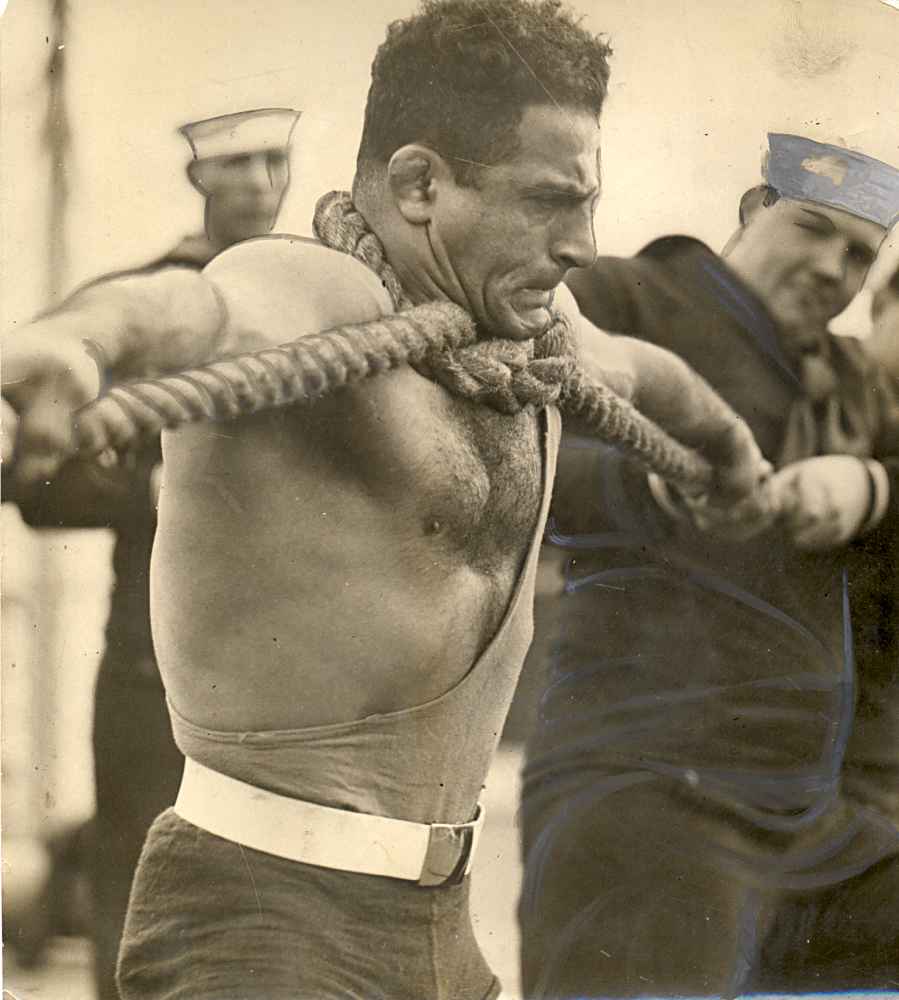
Perhaps the most fearsome and sublimely Orientalist gimmick, however, has been that of the evil Middle Easterner donning a dastardly, oversized mustache, shaved head, and stereotypically ethnic garb from keffiyehs to pointy boots. But before there was Ed Farhat’s The Sheik, Sheik (or, alternatively, General) Adnan Al-Kaissey, Hossein Khosrow Ali Vaziri’s The Iron Sheik, and Solofa Fatu Jr.'s masked Sultan, there was Harry Ekizian, known in the annals of wrestling history as Ali Baba.

In a magnificent new profile of Ekizian, published by the independent, online Armenian Diaspora news, commentary, and culture outlet Ianyan Magazine, journalist Liana Aghajanian recounts the harrowing adventures – both tragic and inspiring – of a survivor of genocide and slavery turned world wrestling champion.

Aghajanian writes:
Harry was born Arteen Ekizian in the Black sea port town of Samsun in 1901 to a wealthy Armenian tobacco merchant who worked for the American Tobacco Company. His father Krikor traveled back and forth to America from Turkey, eventually earning American citizenship – a crucial precedent which later contributed to Ekizian’s safe passage to the U.S.

When the systematic attempt orchestrated by the Ottoman government to wipe out its Armenian, Assyrian and Greek populations began, Ekizian was only 14 years old.
Ekizian lost most of his immediate family in horrors that followed; his father hanged, brother starved, mother and younger sister disappeared. Then things got worse. Ekizian was caught and sold into slavery, languishing in captivity and forced to do hard labor for four years until he miraculously escaped and reunited with an older sister in Constantinople. From there, with the help of an uncle in Massachusetts, Ekizian managed to make his way to the United States in 1920.[1]


After working in his uncle's fish market, he joined the U.S. Navy, serving two terms during the Roaring Twenties. During Ekizian's active military service, Aghajanian writes, "he passionately took up the sport that forever changed the course of his life." After winning several Fleet Championship titles, Ekizian earned the title of World Champion Navy Wrestler after an international bout in Copenhagen and was "honored at a White House Reception in 1927 by President Calvin Coolidge."

Ekizian relocated to Pasadena, California, where he worked in an auto body shop, and married and started a family. In 1932, a promoter in Phoenix gave him his first professional wrestling match. His athleticism and swarthy Middle Eastern looks led inevitably to a short-lived career in nearby Hollywood, playing monstrous, uncredited roles in Erle Kenton's "Island of Lost Souls" (starring Charles Laughton and Bela Lugosi) in 1932 and W.C. Fields' "Man of the Flying Trapeze" in 1935. In a little known film called "Registered Nurse," Ekizian portrayed a character known as "El Humid the Bone Crushing Turk."

At the same time, the combination of sport and performance - from the squared circle to the big screen, and back again - helped Ekizian establish himself as a undeniable force in the Trust Era of professional wrestling, when opportunistic and ambitious promoters like Jack Curley, Billy Sandow, Toots Mondt, Joe Stecher, "Strangler" Ed Lewis, Jack Pfefer, Paul Bowser, Rudy Miller, Wladek Zbyszko, and Earl Caddock formed various profit-sharing consortia, dominated the industry, and expanded wrestling's popularity from coast to coast. Ekizian wrestled under various names, including the Terrible Turk, Break 'Em Neck Harry, and the Krushing Kurd.

Following a bout in Greeley, Colorado on March 11, 1935, where he wrestled under the moniker Ali Yumed, Ekizian's opponent Tex Wright dropped dead. A report in the Colorado Springs Gazette two days later noted, however, "The Weld County coroner, who performed an autopsy, said Wright was suffering chronic myocarditis, and should have not engaged in wrestling because of his heart condition."

Ekizians' star continued to rise. In 1936, he began wrestling for Adam Weissmuller (cousin of Olympian and Hollywood Tarzan Johnny Weissmuller), adopted a menacing Arab gimmick, and changed his ring name to Ali Baba. His instant popularity around Detroit, with its large Middle Eastern immigrant community, ensured his success and it was there, on April 25, 1936, that Ali Baba defeated reigning World Heavyweight Champion Dick Shikat for the title in an infamous shoot match (that is, the outcome was not predetermined). He repeated the feat in an 53-minute long bout before 7,000 screaming fans the following month at Madison Square Garden in New York City, thus gaining official recognition as undisputed World Champion by the notorious New York State Athletic Commission.

"The Armenian Assassin makes Poor Shikat Bleed," screamed a headline in the Pittsburgh Press, while the Pittsburgh Post-Gazette described Baba as weighing in at 212 pounds (compared to Shikat's 227), "190 lbs of which is said to be stored in his angry mustache."

Though Ali Baba lost by disqualification to Dave Levin in Newark, New Jersey on June 12, 1936 (in a purported double-cross by promoter Toots Mondt), he officially dropped his title to Everette Marshall later that month in Columbus, Ohio. He lost to Marshall again on November 20 of that year in Chicago, consequently losing all claim to the championship.

His story, however, does not end there, and not just because Ekizian continued to main event wrestling cards across the country and around the world for years to come. Aghajanian writes,
But while his persona helped define an era of professional character wrestling that eventually permeated pop culture, it was only part of who Ekizian was. A seasoned rancher, doting family man and steadfast Christian who always credited God with his survival from slave to "strong man," Ekizian's agile hands once used to "crush" his opponents became legendary in California's Central Valley as he reinvented himself into a masseur, healing the aches and pains of migrant workers and business men alike.
Retiring to a citrus ranch in Dinuba, California after years on the road (and a divorce and second marriage to his beloved Henrietta), Ekizian lived out his days surrounded by family and friends. He died of a stroke on November 16, 1981 in San Luis Obispo. Against all odds - from genocide to slavery to the outrageous excesses of life in pro wrestling - Ekizian had made it to 80 years old, a life full of unspeakable sorrow and improbable success, from bondage to belt-holder.

Writes Aghajanian in her touching tribute to the Armenian titan, "It wasn't just Ekizian's strength, but an unflinching tenacity for life through both tragedy and triumph that truly made him a survivor."

While many still question the authenticity of professional wrestling, there can be no disputing that Harry Ekizian, the legendary Ali Baba, was - as current wrestling tycoon Vince McMahon would say - the real deal.

Read Liana Aghajanian's profile of Ekizian here and check out Ali Baba at work in the below clip from his October 11, 1939 match against Red Brannigan in Los Angeles.


[1] An alternative history compiled by wrestling researcher Steve Yohe for his 2002 self-published "Ali Baba Record Book" claims Ekizian was a Pasadena native, having graduated from Pasadena High School in 1917 and attended Pasadena Junior College as a wrestler in 1919 before relocating across the country to Boston in 1920 to work in his uncle's fish store. After struggling to make name for himself on the wrestling circuit, mostly due to his relatively small stature, he joined the U.S. Navy in 1923 and wrestled his inaugural Navy match against "Tarzan" Knight of Delaware on July 1, 1924.

Naturally, when discussing the larger-than-life personalities and mythologized personas of professional wrestling, one general rule applies: "Print the legend."


*****

Originally posted at Muftah.

*****

Friday, April 18, 2014

Rittrati Carichi Persiano: The ‘Loaded Portraits’ of Mohammad Ali Ziaei


With wretched pencil to debase
Heaven’s favourite work, the human face,
To magnify and hold to shame
Each little blemish of our frame.


Not since Tom Hachtman’s “DoubleTakes,” published in 1984, has there been a motley collection of caricatures of notable public figures – world leaders, celebrity personalities, all-star athletes, renowned artists – so thoroughly captivating and compelling.

And never before, perhaps, have such exaggerated cartoon characters been as strikingly beautiful and evocative as those drawn by Tehran-born, Vienna-based artist Mohammad Ali Ziaei.

A student of Vienna’s Industrial Design University of Applied Arts between 2002 and 2007, the now 31-year-old Ziaei has deftly trained his pen on a diverse array of subjects. From Gandhi to Amy Winehouse, Russian mystic Rasputin to South Korean pop sensation Psy, Benazir Bhutto to Donald Trump, the drawings Ziaei crafts demonstrate precisely why the term “caricature” is derived from the Italian and French terms for a “loaded portrait.”

In The Economy of Character, University of Toronto professor Deidre Lynch explains that, according to eighteenth-century British commentary on this imported Roman style of what is essentially narrative or editorialized portraiture, “caricature couples the act of willfully carrying character drawing to excess – of swelling figures and being prodigal in one’s handling of the signs of humanity – with the tendering of a truth claim, the claim that the drawing improves on extant modes of imitating nature and conveys truths about the person more truly.”

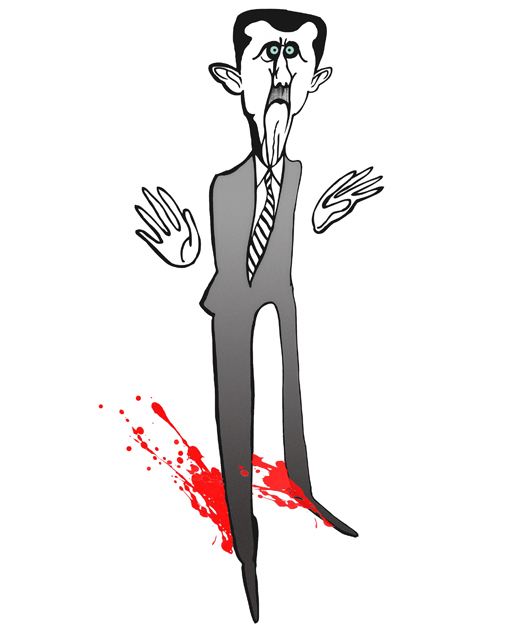
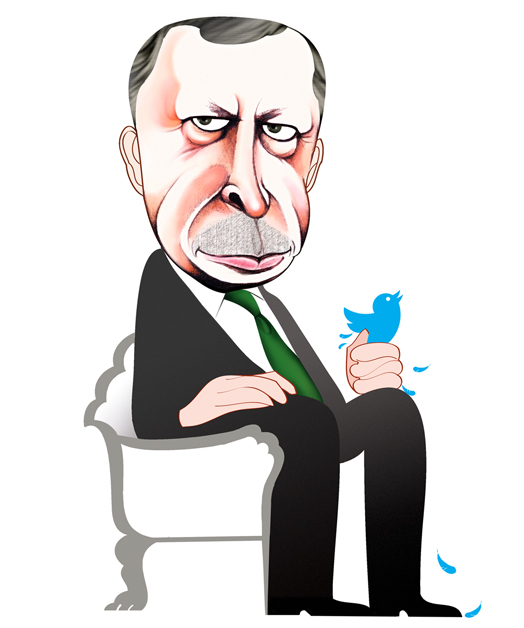
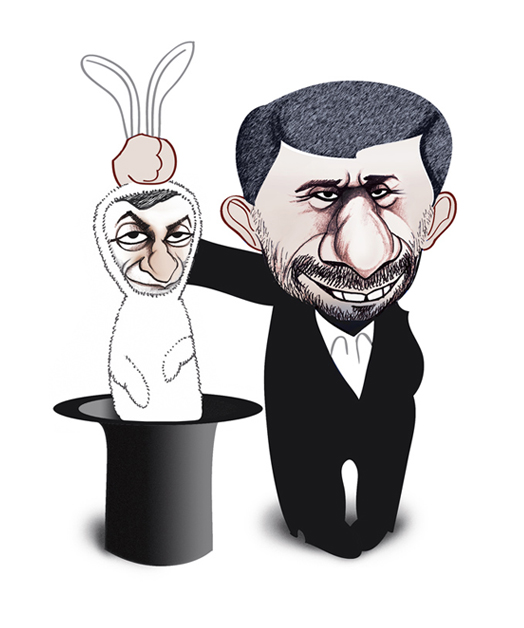
This, indeed, is what Ziaei often achieves in his work. As caricatures are all effectively political cartoons (usually revealing the political persuasion of the artist far more than the subject), it is unsurprising that Ziaei’s drawings have been featured on the International Political Forum website. One glimpse at Ziaei’s drawings of Bashar al-Assad, Mir-Hossein Mousavi, Recep Tayyip Erdogan, and Mahmoud Ahmadinejad makes clear where he stands.

Most impressive though are his caricatures of iconic Iranian political players old and new (from the Qajar dynasty to President Hassan Rouhani), along with his renderings of some of Iran’s most heralded poets, artists, writers, and musicians (including Sadegh Hedayat, Mohsen Namjoo, Ahmad Shamloo, and – my namesake – Nima Youshij).

Below are some of Ziaei’s portraits, but be sure to visit his full collection here.

All credit – besides that given to Ziaei himself for his immense talent – goes to ReOrient Magazine and S&F Joon for getting there first and putting this on my radar.

Sadegh Hedayat, writer (1903-1951)

Ahmad Shamloo, poet, writer, and journalist (1925-2000)

Hayedeh, Persian classical singer and pop vocalist (1942-1990)

Mohsen Namjoo, singer-songwriter (b. 1976)

Mohammad-Reza Shajarian, Persian classical singer and composer (b. 1940)

Qajar Dynasty (1794-1925): Mohammad Shah Qajar, Fat′h-Ali Shah Qajar, Mohammad Khan Qajar, Naser al-Din Shah Qajar, Mozaffar al-Din Shah Qajar, Mohammad Ali Shah Qajar, Ahmad Shah Qajar (l-r).

Mohammad Mossadegh (1882-1967)

Mohammad Reza Shah Pahlavi (1919-1980)

Akbar Hashemi Rafsanjani (b. 1934)

Mir-Hossein Mousavi (b. 1942)

Hassan Rouhani (b. 1948)

And this one, just because I can’t resist:


And, from the grotesque to the sublime, my personal favorite:

Nima Youshij, the father of modern Persian poetry (1896-1960)

*****

Originally posted at Muftah.

*****

Monday, April 7, 2014

Rabid Rabin: Remember, Netanyahu's Nuclear Propaganda is Nothing New

Rabin at the White House with President Bill Clinton, 1995.
(Robert Giroux/AFP/Getty Images)

Lest anyone think that Benjamin Netanyahu invented the talking points so often repeated in hysterical Israeli warnings about Iran, here's a glimpse at what Yitzhak Rabin told AIPAC back in 1995:
Oh yeah, and just in case you thought presidential pandering to Israeli alarmism has increased in the last two decades, here's a reminder of what Bill Clinton told the same assembly:
All of you know that Iran, a country with more than enough oil to meet its energy needs, wants to buy reactors and other nuclear technology from Russia. This fact, together with other evidence about Iran's nuclear program, supports only one conclusion: Iran is bent on building nuclear weapons. 
I believe Russia has a powerful interest in preventing a neighbor, especially one with Iran's track record, from possessing these weapons. Therefore, if this sale does go forward, Russian national security can only be weakened in the long term. The specter of an Iran armed with weapons of mass destruction and the missiles to deliver them haunts not only Israel but the entire Middle East and, ultimately, all the rest of us as well. 
The United States, and I believe all the Western nations, have an overriding interest in containing the threat posed by Iran. Today Iran is the principal sponsor of global terrorism, as the Prime Minister has said. It seeks to undermine the West and its values by supporting the murderous attacks of the Islamic Jihad, Hezbollah, and other terrorist groups. It aims to destroy the Middle East peace process. 
You know the need for firm action here as well as I do. And I thank you for your long history of calling attention to Iran's campaign of terror. I thank you for urging a decisive response, and I thank you for supporting the action we have taken. We have worked to counter Iran's sponsorship of terrorism, its efforts to acquire nuclear weapons. We led our G-7 allies to ban weapons sales, tightening trade restrictions on dual-use technology, and in preventing Iran from obtaining credit from international financial institutions. But more has to be done. That's why I ordered an end to all U.S. trade and investment with Iran.
The more things change, the more they stay the same.

*****

Sunday, April 6, 2014

New Federal Indictment Over Iran Sanctions Breach Demonstrates Reach of Nuclear Disinformation

United States Attorney for the District of Massachusetts Carmen Ortiz

A brief news story posted by Reuters at 3pm on Friday afternoon reported that Sihai Cheng, a Chinese national, is facing criminal charges brought by the U.S. government for allegedly having conspired to export "pressure transducers," sensors that translate the application of pressure into electrical signals, to Iran. This is in violation of sanctions that restrict trade of scientific equipment and technology to that country.

Cheng was arrested at Heathrow airport two months ago and the indictment was brought by Boston field offices of the FBI, Department of Homeland Security, Department of Commerce, and the Department of Justice's Massachusetts District Attorney.

Following the publication of the Reuters report, the news traveled fast via such outlets like Bloomberg News, AFP, Telegraph, and BBC, inevitably tying the news to the ongoing international nuclear negotiations taking place between six world powers and Iran.

Pressure transducers have myriad industrial and scientific uses; their use in the transforming pressurized gas in centrifuges to an analog electrical signal is but one of these applications. A statement released by the U.S. Attorney's office declares, "Pressure transducers can be used in gas centrifuges to enrich uranium and produce weapons-grade uranium."

The fact is that transducers can be used for thousands of other reasons. Still, it is important to understand that Iran's enrichment of uranium is legal, its enrichment facilities are under strict IAEA monitoring and inspection, and Iran has never been accused of enriching uranium to weapons-grade levels.

The prosecution of people accused of breaching the aggressive U.S.-led sanctions regime is nothing new. Just last month, Mohammad Reza Nazemzadeh, a prolific and respected medical research scientist in Michigan was inexplicably indicted for trying to send a refurbished coil for an MRI machine to a hospital in Iran. However, the particular language used in press reports to describe the indictment of Cheng - in bold below - is relevant.

Reuters reported that Cheng had "supplied thousands of parts that have nuclear applications to Eyvaz, a company involved in Iran's nuclear weapons program, in violation of U.S. sanctions on Iran, federal prosecutors said."

Bloomberg News used the same formulation:
From November 2005 to 2012, Cheng allegedly supplied thousands of parts that have nuclear applications to Eyvaz, an Iranian company involved in the development and procurement of parts for Iran’s nuclear weapons program.
"Iran's nuclear weapons program." Read that again. "Iran's nuclear weapons program." The ubiquity of this phrase in the press and political speechifying belies the fact that Iran does not actually have a nuclear weapons program and is thus, not only deliberately deceiving, but patently false.

It should now go without saying that, for years now, the United States intelligence community and its allies have long assessed that Iran is not and never has been in possession of nuclear weapons, is not building nuclear weapons, and its leadership has not made any decision to build nuclear weapons. Iran's uranium enrichment program is fully safeguarded by the IAEA and no nuclear material has ever been diverted to a military program. Iranian officials have consistently maintained they will never pursue such weapons citing religious, strategic, political, moral and legal grounds.

This assessment has been reaffirmed year after year by the U.S. Director of Intelligence James Clapper, most recently in mid-February before the Senate Armed Services Committee. U.S. intelligence has maintained for nearly seven years a high level of confidence that Iran has no nuclear weapons program.

Nevertheless, this phraseology goes frequently unchallenged in the mainstream media - despite repeated appeals by ombudsmen and public editors for more careful and measured writing by their reporters.

Reporting on the Cheng case, however, is a bit more revealing. The specific claim referencing an Iranian "nuclear weapons program" did not originate with the Reuters wire service or Bloomberg's own cribbed report. That phrase in its entirety came from the U.S. Attorney's own press release about the indictment, which was posted Friday by the "Boston Press Release Service," and has still (as of this writing) not appeared on the website for the U.S. Attorney for the District of Massachusetts.

That the offending phrase - "Iran's nuclear weapons program" - was literally copied-and-pasted directly from a government statement by professional reporters for major news outlets, without a shred of skepticism, scrutiny or fact-checking, is sadly par for the course in a media landscape wherein the press simply parrots the government line as a matter of policy.

"The indictment alleges that between in or about November 2005 and 2012, Cheng supplied thousands of parts that have nuclear applications, including U.S. origin goods, to Eyvaz, an Iranian company involved in the development and procurement of parts for Iran's nuclear weapons program," the release reads.

The government prosecutor responsible for the indictment is Massachusetts' U.S. Attorney Carmen Ortiz, whose sordid history of overly-aggressive prosecution includes one case leading to the suicide of computer programmer and online activist Aaron Swartz in January 2013.

In the Cheng indictment, Ortiz has thus made an assumption about Iranian actions and intentions that directly contradicts the consensus of 16 American intelligence agencies.  Furthermore, the prosecution itself is part of the Obama administration's own economic war on Iran.

Just two weeks after Iran and the P5+1 signed a Joint Plan of Action in late November 2013, the U.S. State and Treasury Departments specifically named Eyvaz Technic Manufacturing Company among companies targeted "for evading international sanctions against Iran and for providing support for Iran's nuclear program."

The recent indictment and accompanying press release present a clear indication that the decades-long disinformation campaign about Iran's nuclear program is far more powerful and sustaining than facts and evidence. And that's bad news when the propaganda comes straight from the Department of Justice.

*****

UPDATE:

April 12, 2014 - As usual, the great investigative journalist Gareth Porter has sunk his teeth into this indictment story and has - also, as usual - emerged with some striking revelations.

In his story for the DC-based wire service IPS, Porter addresses the constant conflation between Iran's legal, safeguarded and monitored gas centrifuge enrichment program and an imaginary "nuclear weapons program."

Porter:
The indictment doesn’t actually refer to an Iranian nuclear weapons programme, as the Ortiz press release suggested. But it does say that the Iranian company in question, Eyvaz Tehnic Manufacturing, “has supplied parts for Iran’s development of nuclear weapons.”
The indictment claims that Eyvaz provided “vacuum equipment” to Iran’s two uranium enrichment facilities at Natanz and Fordow and “pressure transducers” to Kalaye Electric Company, which has worked on centrifuge research and development.
But even those claims are not supported by anything except a reference to a Dec. 2, 2011 decision by the Council of the European Union that did not offer any information supporting that claim.
The credibility of the EU claim was weakened, moreover, by the fact that the document describes Eyvaz as a “producer of vacuum equipment.” The company’s website shows that it produces equipment for the oil, gas and petrochemical industries, including level controls and switches, control valves and steam traps.
Moreover, the connection between the companies designated off-limits by the U.S. government and Iran's nuclear program are shown to be quite tenuous and exaggerated for political purposes.

*****