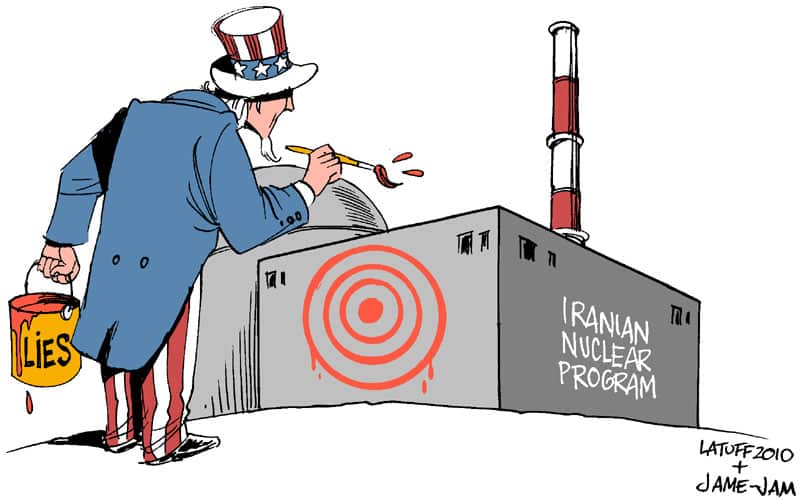
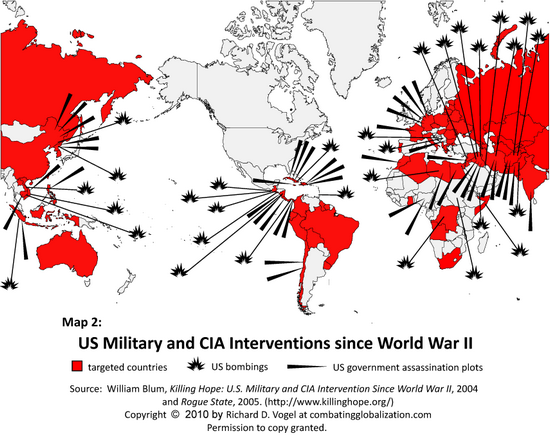
"Only crime and the criminal, it is true, confront us with the perplexity of radical evil; but only the hypocrite is really rotten to the core."
- Hannah Arendt
J Street executive director Jeremy Ben-Ami disavowed support for Peter Beinart's recent settlement boycott call in an interview with American Jewish establishment bouncer Jeffrey Goldberg just days before Beinart's official book release event at J Street's annual conference.
In addition to admitting, with Goldberg's agreement, that Green Line Israel and Occupying Israel are literally inseparable, Ben-Ami stated that J Street does not support the BDS call to hold Israel accountable to international law and to grant equal civil and human rights to Palestinians in their own homeland. When Goldberg asked Ben-Ami why he disagrees with Beinart's call "for a boycott of products made in settlements," the J Street head explained:
Because I don't think that it makes any sense to put negative pressure on people whose behavior you hope to change. I think that the way that Israelis will feel comfortable making the compromises and the sacrifices--and Israel as a whole, not just the settlers --is when they really feel that not only American Jews, but the United States, is going to be there for them. I think if you begin to do things that say, "We're not really with you, we're against you, we're putting pressure on you," I think that causes people to pull more into a shell and pull back.
Ben-Ami added that when the "Jewish people" feel "under pressure, under criticism, under attack," they will "get defensive" and respond stubbornly and aggressively to such pressure. "Rather than it making you more inclined to do something, it actually makes you less inclined," Ben-Ami says.
So, according to the so-called "liberal" wing of the Zionist community in the United States, Jews don't respond well to "negative pressure" over the continued Israeli ethnic cleansing, occupation and colonization of Palestine. In fact, the rights-based approach of the BDS movement, in Ben-Ami's opinion, will only cause Israel and its Jewish supporters here in the U.S. to become less amenable to the basic tenets of non-discrimination, human rights, self-determination and the rule of law.
Yet, when Ben-Ami claims to believe it is counter-productive and self-defeating "to put negative pressure on people whose behavior you hope to change," his opinion doesn't appear to apply to all people, but only to Jews. Such a quirk of human nature certainly doesn't extend to Iranians. If it did, one would assume Ben-Ami wouldn't so strongly advocate for and support the multiple rounds of sanctions implemented on the Islamic Republic.
Of course, thirty years of increasingly draconian sanctions against Iran is a textbook definition of "negative pressure," and this kind of pressure - when the target is Iran, not Israel - is the kind Jeremy Ben-Ami has no qualms encouraging. But, even more importantly, let's all be clear: Israeli settlement of Palestine is illegal in the extreme; not a single government or internationalorganization on the planet other than the offender itself recognizes such colonization as legitimate or lawful. Iran's nuclear energy program, however, is fully legal, constantly monitored and inspected, and is not weaponized. While BDS calls for Israel to respect international law, sanctions against Iran explicitly abrogate it.
In a statement released October 16, 2009 regarding the latest "Iran Refined Petroleum Sanctions Act," Ben-Ami himself declared that, if coercive "engagement" over Iran's nuclear energy program (read: Iran kowtowing to Western diktat) fails to produce the "desired result," then "the United States should seek hard-hitting multilateral sanctions" followed by "[t]he imposition of unilateral sanctions, without UN approval or the support of allies." He also reiterated that, while his organization encourages "diplomatic engagement and multilateral action" with regard to Iran, "J Street does not oppose the imposition of sanctions per se."
Two months later, when asked why J Street supported new sanctions on Iran, Ben-Ami claimed that Congressional bill "gives the president this tool, this additional tool, to work with in trying to convince the Iranians that there's no time." Perhaps he believes that Iranians, by virtue of not being Israeli, consider sanctions to be positive pressure. But probably not, considering Ben-Ami, in the same interview said, "Well, there's no question that the sanctions ultimately does hurt people," adding, "This is also important in putting a real squeeze on the government."
Apparently Ben-Ami believes that the time Iranians have to capitulate to Western demands to give up its sovereign, national rights is short, while the Israelis have plenty more time to decide to stop their century of colonization and "pressure" might make them more dismissive of the Geneva Conventions, Nuremberg Principles, United Nations Charter and the Universal Declaration of Human Rights.
Writing today in The Diplomat, Iranian-born Israeli analyst Meir Javedanfar opined on how the West - namely the United States - can best strong-arm the Iranian leadership into accepting Western demands and the illegal abrogation of its inalienable national rights.
In order to force Iran to curb its IAEA-inspected program - a program that has never been found to have diverted nuclear material from peaceful purposes to weaponization - Javedanfar suggests an ultimatum is in order: that the West issue "a clear message to Iran's supreme leader that even if he does build a bomb, or just reaches a breakout capability, the sanctions and isolation won't end. In fact, the opposite should be true: they will continue or even get worst [sic]."
While admitting that "Western intelligence agencies have suggested that Khamenei hasn't actually made the decision to make a bomb," Javedanfar somehow thinks "the price that he's already paying for the nuclear program seems to suggest that he wants to reserve this option. Otherwise, why go through all this pain?," he wonders.
The idea of national sovereignty and international law never enters Javedanfar conception of why Iran might not accept illegal demands on its own domestic energy program and policies. Furthermore, Javedanfar studiously ignores numerousIranianoffers to curb and cap its own enrichment program and open up its program to international cooperation - actions that would certifiably preclude any weaponization breakout capacity - as long as its right to enrich under the Nuclear Non-Proliferation Treaty is duly acknowledged and accepted, something the United States refuses to do. Ignored as well are Iran's recent moves to reduce its stockpile of enriched uranium by converting the material into fuel plates, a process that makes it virtually impossible to further enrich to weapons-grade levels.
Despite these facts, Javedanfar continues his train of thought:
[Khamenei's] calculation appears to be that Iran can continue along its current path, paying a price for doing so, but that the costs of its continued defiance will end once he has made his decision and the country produces a bomb. After all, why would sanctions aimed at deterrence continue once Iran has secured a bomb?
He also claims that "by making clear that sanctions will be continued even if Iran manages to build a bomb, the West will be sending a message to Iran’s leader that the sooner he reaches a deal with the West, the lower the economic cost will be," continuing, "Similarly, if he decides to continue, the longer he waits, the more the country’s economy will pay. The regime can’t continue with the economic status quo indefinitely. If the economy collapses, nothing will be able to save it or stave off the regime-threatening instability that would come with it."
What Javedanfar seems not to understand is that sanctions can not simply be magically lifted once Iran does what the United States wants it to do on Israel's behalf and that, as Yousaf Butt and others have clearly articulated in the past, sanctions (which are effectively enforced by an AIPAC-controlled Congress) will remain in place regardless of what happens with Iran's enrichment program. The point is regime change, not a nascent nuclear program.
"The best outcome for the West and Israel would be to get Khamenei himself to change his current nuclear policy," Javedanfar writes. But considering the IAEA has never once found Iran to have diverted any nuclear material to a military program and Iran has never once been found to have violated the Nuclear Non-Proliferation Treaty (a compact never signed by nuclear-armed Israel, Javedanfar's home country), one has to wonder what "change" in Iran's "current nuclear policy" is being called for.
In fact, the entire premise of Javedanfar's article rests upon a simple assumption he makes and never questions: that Iran is, without question, actively attempting to acquire the ability to build a nuclear weapon with the undeniable goal of future weaponization. For Javedanfar, this is a matter of faith. The fact that there is no evidence to support this claim is irrelevant to him.
Nevertheless, in order to "facilitate a compromise," Javedanfar suggests the West "offer Khamenei something." What is his advice? "Allowing Iran to enrich uranium on its soil up to the 5 percent level would seem possible, under the condition that Iran answers all International Atomic Energy Agency questions, and opens its sites for strict inspection by the agency at all times."
At least Mr. Javedanfar's position is clear. He is expressly stating his belief that Iran does not have the same inalienable rights to nuclear energy, research and development and enrichment as virtually every single other country on the planet and should be threatened and bullied into giving up its national rights by countries that currently have huge nuclear arsenals. He also seems to think that the only reason for a country to assert its rights in the face of extremely aggressive opposition and attempted abrogation by the world's most militaristic and imperial powers is so that it can build weaponry that it has repeatedly declared to be "useless," "inhumane" and "evil."
Furthermore, Javedanfar advocates that the United States continue to collectively punish the Islamic Republic - its government and citizens alike - in order to destroy the country's economy and turn public opinion against the regime, a tactic he should know has virtually no chance of succeeding given that the vast majority of Iranians support their domestic, civilian nuclear program and aren't interested in another revolution (especially not one pushed by the United States and Israel). If that's not enough, he continues to accept that the sanctions against Iran are actually about "the nuclear issue" and that, with that stand-off resolved (and by "resolved" he means "ending with Iran acquiescing to illegal Western diktat"), Iran will no longer face economic warfare, military threats, and the constant barrage of propaganda that currently make up Western policy with regard to Iran. With regime change so clearly the goal of three decades of pressure against Iran, this suggestion is borderline absurd.
While Javedanfar is clearly opposed to a military conflict at this time, his policy proposals leave something to be desired, namely due to their reliance on false narratives and conventional assumptions that don't stand up to scrutiny. For instance, Mr. Javedanfar's suggestion that the West "offer" Iran, and Khamenei specifically, a way to "save face," ignores the plain fact that Iran has the right to enrichment, research and development of civilian nuclear energy regardless of what the West "offers."
Iran's program is not, under any circumstances, subject to the beneficence, generosity, or acquiescence of any other state, government or world body. Furthermore, and more importantly than repeating matters of international law and national rights, the "offer" which Mr. Javedanfar suggests be put forth is not new at all. In fact, it looks nearly identical to what the Iranian government has been officially suggesting for quite some time now; notably, that - following the West's official acknowledgement of Iran's right to enrichment et al. and a framework established whereby sanctions would be systematically lifted and nullified - Iran would reinstate the IAEA's Additional Protocol for an extended period of time.
As Hossein Mousavian, former spokesman for the Iranian nuclear negotiation team, has repeatedly confirmed, when IAEA representatives - led by Deputy Director General Herman Nackaerts - visited Iran in October 2011, Iran's Atomic Energy Organization chief Fereydoon Abbasi-Davani "offered a blank check to the IAEA, granting full transparency, openness to inspections, and cooperation with the IAEA. He also informed Nackaerts of Iran's receptiveness to putting the country's nuclear program under 'full IAEA supervision,' including implementing the Additional Protocol for five years, provided that sanctions against Iran were lifted."
During that same visit, the IAEA team was admitted to "Iran's heavy water facilities and centrifuge production and R&D centers," a voluntary initiative that "goes even beyond the Additional Protocol."
Also, though Mr. Javedanfar doesn't mention it, Iran has already - repeatedly - offered to stop enriching uranium to nearly 20% (thereby limiting its enrichment to 5%, as he suggests might be part of a Western "offer") if it were able to purchase fuel plates for the Tehran Research Reactor. Ahmadinejad, in September 2011, told The New York Times and The Washington Post (and later other mediaoutletsboth in the West and Iran), "If they give us the 20% enriched uranium this very week, we will cease the domestic enrichment of uranium of up to 20 percent this very week. We only want the 20% enrichment for our domestic consumption. If they give it to us according to international law, according to IAEA laws, without preconditions, we will cease domestic enrichment [to 20%]."
With this in mind, it's clear that Iran's position has long been precisely what Mr. Javedanfar believes the West should "offer," with one notable exception: he believes this offer should be advanced as an ultimatum with the threat of increased sanctions, the deliberate collapse of the Iranian economy and compounded hardship for the people of Iran if the Iranian government does not comply with Western demands. As is always the case with such aggressive economic warfare, military action is surely waiting in the wings.
Is the suggestion that the West repackage a long-held and often-stated Iranian proposal back to the Iranians under the guise of a new generous "offer" and advanced by the threat of continuing and increased sanctions if Khamenei doesn't "change [his] current nuclear policies"? Considering the IAEA has full access to all safeguarded facilities and material, and both U.S. and Israeli intelligence establishments are confident that Iran has no nuclear weapons program, what "nuclear policies" is Javedanfar referring to? One would think that, with an honest assessment of existing evidence and information, those of us who hope to stave off violence and aggression against Iran by nuclear-armed, highly-militarized states with a penchant for invading and occupying Middle Eastern countries would suggest the West stop issuing threats, demands, and ultimatums first and foremost.
In other words, what Javedanfar advocates is pretty much the same
thing that the Obama administration has long been demanding from Iran.
Such analysis is therefore meaningless, redundant, unoriginal,
unchallenging and wholly unremarkable. As such, his work is virtually indistinguishable from establishment groupthink (replete with unfortunate fealty to Zionist hasbara and the whitewashing of Israeli war crimes, in his case coming directly from a somewhat paranoid Israeli perspective).
For example, Javedanfar was wary of the consequences of the Egyptian revolution that deposed the U.S.-puppet, Israel-friendly dictatorship of Hosni Mubarak. Writing in Foreign Policy in early 2011, he warned, "Mubarak's fall would be very bad news for Israel as a whole."
He also appears not to support the immediate establishment of a Nuclear Weapons Free Zone in the Middle East due to his own country's stockpile of hundreds of undeclared, non-safeguarded, unmonitored nuclear warheads and the military deterrence he believes they provide.
In the 2007 book he co-authored with Israeli journalist Yossi Melman, Javedanfar writes that when Egyptian-born Mohammad ElBaradei became head of the IAEA, "His nationality and ethnicity lead Israeli decision makers, especially the Israeli Atomic Energy Commission, to fear that he is anti-Israel." Beyond the overt racism and bigotry of this sentiment, "His tireless work to promote a nuclear-free world, and especially his extensive efforts to establish a Nuclear Weapons Free Zone (NWFZ) in the Middle East, didn't win him friends in Israel." Javedanfar and Melman continue:
The Jewish state, in theory, is ready to accept a NWFZ in the Middle East, but only after all its Arab and Muslim enemies recognize Israel's right to exist and confirm that with peace treaties and security arrangements. Until then, Israel won't even discuss the idea.
While such a statement certainly appears objective - a simple report of how the Israeli government establish thinks - this belief doesn't not appear to be challenged in Javedanfar's own writing. While constantly suggesting curbs, limitations, and red lines be placed on Iran's non-weaponized nuclear program, Javedanfar remains silent about Israel's refusal to join the NPT or acknowledge (let alone dismantle) its nuclear arsenal. Chances are, his own feelings about Israel's nukes track closely those of both Tel Aviv and Washington: Israeli hegemony, exceptionalism and double standards control the discourse. [Update: Yes, Javedanfar's own views appear to match that of the Israeli establishment (1/4/13)]
To read Javedanfar's
suggestions, then, one might as well be tuning into a State Department
briefing or White House press conference. Basically, he brings absolutely nothing
new to the table in the discourse over Western relations with Iran: demands, advanced by threats and punitive sanctions for non-compliance and the assumption that Iranian national rights are subject to abrogation and dismissal. His prolific writing and ubiquity in mainstream commentary is a testament to the reinforcement of common misconceptions and false narratives within the foreign policy community.
It is therefore no surprise then that, in the introduction to his 2007 book - touted by the authors and publisher as a biography of Iranian President Mahmoud Ahmadinejad - Javedanfar demonstrates his devotion to even the most misinformed and alarmist propaganda points regarding Iran, its political power structure, its president and its nuclear program. Due to what they call Ahmadinejad's "inflammatory rhetoric," the authors (Javedanfar and Melman) claim that "fear is growing that in the near future he who called to wipe Israel off the map may have his finger on the nuclear button." (page ix)
They wrote this despite the fact that the propagandized, misquoted, misinterpreted "wipe off the map" allegation and its hysterical exploitation had alreadybeenexposed and debunked many times and the fact that the Iranian president wields no control over the nation's military, foreign policy or nuclear program. The so-called "nuclear button" upon which Ahmadinejad might have his finger was therefore pure fantasy; a figment of a fear-mongering imagination.
Also, that a native Persian speaker and proud polyglot like Javedanfar would repeat (or approve of Melman repeating) the "wipe off the map" lie when that idiom doesn't even exist in the Persian language and the meaning of the statement is clearly about ending occupation, colonization and apartheid in Israel/Palestine and not nuclear annihilation speaks volumes about Javedanfar's priorities: promoting alarmist propaganda instead of sticking to the facts and championing truth.
Javedanfar's consistent adherence to mainstream Western talking points about Iran is impressive, blaming Iran for "provocations" like the 1979-80 hostage crisis without ever mentioning the 1953 overthrow of Mossadegh or the Shah's decades of torture, oppression and corruption. He never questions accusations over Iran's responsibility for bombings in Beirut, BuenosAires, and SaudiArabia or even the recent absurd allegation about a bipolar Iranian car dealer in Texas plotting the assassination of a Saudi ambassador in Washington D.C. at the behest of Iranian agents, instead regurgitating groundlessgovernmenthysteria with confidence.
That said, while Javedanfar is certainly an alarmist when it comes to the Iranian nuclear program - assuming the worst at every turn, regardless of well-documented facts - he is not a warmonger. He openly abhors Benjamin Netanyahu, Avigdor Lieberman and other far-right Israeli factions. In this way, he is a "liberal," but in the narrow Israeli sense, in that he still holds out hope for a two-solution that will never happen.
He has consistently spoken out against a military strike on Iran, especially one conducted by the Israeli air force only. However, as an Israeli writing in mainstream Western media, his reasons for opposing such aggression seem to have nothing to do with the illegality or immorality of such action; in fact, everything he writes seems to try and answer the question, "What's best for Israel?" He rarely, if ever, mentions the devastating humanitarian consequences of an American or Israeli assault, except when he warns about the blowback Americans or Israelis might face. Iranian civilians - the would-be victims of U.S./Israeli war crimes - don't often get the same consideration.
Javedanfar's warnings about the negative effects of attacking Iran remain well within the realm of acceptable Beltway discourse, never straying out too far to challenge accepted orthodoxies about the so-called Iranian threat or the clear criminality of such a strike. Rather, he cites economic repercussions and "spike in oil prices", potential retaliatory actions by Iran on American soldiers or interests in the Middle East and Hezbollah and Hamas on Israel, and the potential political and diplomatic fallout of U.S.-Israeli relations if Israel were to launch an attack without its patron's permission. He is wary of any Israeli actions that may jeopardize the billions of dollars in military aid it gets every year, as well as the unflinching support granted by AIPAC and the diplomatic cover it receives in international fora, perpetually shielding his country from condemnation and war crimes tribunals. These possible results are what dissuades him from endorsing military action, not international law or human lives.
One could conclude that, if Javedanfar believed an attack on Iran could achieve the results he seeks (most notably, Israeli security and the empowerment of internal opposition to pursue regime change in Iran), he might not be so opposed to the idea. Perhaps this is not true at all - hopefully not. Javedanfar may simply tailor his commentary to the prevailing perspectives and proclivities of his target audience - a readership that may not believe that tenets of international law or the deaths of tens of thousands of Iranians are automatic deal-breakers.
Just last September, in an article co-written by Matt Duss for Foreign Policy, Javedanfar accurately noted, "True naiveté is believing that the [West's] problem [with Iran's nuclear program] can be adequately addressed through mere rhetorical bluster and threats of force, and continuing to shout at Iran across a chasm as the U.S. has done for the last 30 years."
Sadly, with his new article, Javedanfar seems to have reversed course, calling for more threats and sanctions in the hope that this will force Iran to relinquish its civilian nuclear program; a prescription doomed to fail and sure to invite another thirty years of myopic, blustery Western policy.
Unfortunately, commentary like this, if heeded, ensures more of the same for perpetuity.
*****
UPDATE:
June 27, 2012 - Much of what Javedanfar writes relies on the conventional AIPAC/establishment wisdom that Iran's economy is on the verge of total collapse and therefore its leadership will soon be forced to capitulate to Western demands over its nuclear program. This is a canard.
Writing in The National Interest yesterday, former Iranian nuclear negotiator Seyed Hussein Mousavian and editor of the Iranian Review of Foreign Affairs Mohammad Ali Shabani explain:
Consider the Iranian economy, which is nowhere near collapse. The reality is not that "Iran is on the verge of a choice between having a nuclear program or an economy," as Cliff Kupchan, a senior analyst on the Middle East at the Eurasia Group, insists. To put things into perspective, the Islamic Republic has lost some 40 percent of its expected oil income this year, according to the International Energy Agency. The European Union embargo on Iranian oil, due to go into full effect on July 1, has practically already been implemented. Moreover, the Obama administration has already given six-month waivers from sanctions to most other countries purchasing Iranian crude. Assuming even an annualized 60 percent loss—which cannot be taken as absolute truth due to the opaque nature of Iran's crude exports—the Islamic Republic will still rake in an estimated $40 billion from oil this year. That’s roughly twice as much as when Mohammad Khatami was president a decade ago. It is no coincidence that Supreme Leader Ayatollah Ali Khamenei has dubbed this Persian year "the year of national production, supporting Iranian labor and investment."
*****
UPDATE II: October 31, 2012 - Javedanfar has again penned an article, this time for Al-Monitor, wherein he applauds the devastatingeffects of economic and tradesanctions on Iran and suggests that, due to rising domestic suffering and pressure, "it is highly likely that Khamenei will be forced to make a new set of compromises...within two to three years, at most."
In response to Javedanfar, Reza Sanati, a research fellow and PhD candidate at Florida International University's Middle East Studies Center, writes, "Unfortunately, like so much of the conventional thinking among proponents of sanctions and 'pressure,' his argument is built upon a series of fallacies that taken together, present an inaccurate picture of the troubled relationship between Iran and the West, and ultimately makes escalation toward conflict far more likely."
One by one, Sanati eviscerates Javedanfar's points and reaches this conclusion:
Rather than a compromise, as Javedanfar predicts, if the current sanctions on Iran persist, a more likely outcome could instead be Iran withdrawing from the Nuclear Non-Proliferation Treaty and preparing for a conflict that is being imposed on it no matter what it does with its nuclear program.
The fundamental problem that divides the US from Iran is not whether the latter has a nuclear program. It is that Iran's role in regional security and global affairs has been denied since the Iranian Revolution, creating a sense in Tehran of strategic vulnerability. It is this insecurity that drives much of the Islamic Republic’s foreign policy, begetting reciprocal US animosity and thus exacerbating the immense mutual mistrust of each other’s intentions. As long as this underlying problem is not addressed, a peaceful resolution to Iran’s nuclear program and other issues will remain elusive.
The bodies of Afghan civilians loaded into the back of a truck in Alkozai village of Panjwayi district of Kandahar (AFP)
"Great shapes like big machines rose out of the dimness, and cast grotesque black shadows, in which dim spectral Morlocks sheltered from the glare...there was an altogether new element in the sickening quality of the Morlocks — a something inhuman and malign...I wondered vaguely what foul villainy it might be that the Morlocks did under the new moon."
Nearly eight years ago, on April 1, 2004, former speech writer and Special Assistant to Ronald Reagan, Peggy Noonan wrote an article for the Wall Street Journal, where she was a contributing editor. It began like this (emphasis in original):
The world is used to bad news and always has been, but now and then there occurs something so brutal, so outside the normal limits of what used to be called man's inhumanity to man, that you have to look away. Then you force yourself to look and see and only one thought is possible: This must stop now. You wonder, how can we do it? And your mind says, immediately: Whatever it takes.
The brutal, inhuman event she was referring to was the killing in the Iraqi city of Fallujah of four American civilian contractors, whose SUV was ambushed by rocket-propelled grenades the day before. The four men, all employees of the infamous mercenary outfit Blackwater, were shot, their bodies burned, mutilated, and dragged through the streets in celebration. The charred corpses of two of those killed that day were strung up on a bridge over the Euphrates River. The news, and accompanying photographs, sent shockwaves of horror and disgust through the United States and prompted endlesseditorialsfromcoasttocoast.
Noonan described "the brutalization of their corpses" as "savage, primitive, unacceptable" and decried that the "terrible glee of the young men in the crowds, and the sadism they evinced, reminds us of the special power of the ignorant to impede the good." She wrote that the Iraqis responsible for such gruesome actions "take pleasure in evil, and they were not shy to show it. They are arrogant. They think barbarity is their right."
White House spokesman Scott McClellan condemned the killings as "despicable, horrific attacks" and "cowardly, hateful acts," saying, "it was inexcusable the way those individuals were treated." He called those responsible for the deaths "terrorists" and "a collection of killers" and vowed that "America will never be intimidated by thugs and assassins."
A few days later in the San Diego Union-Tribune, editor Robert J. Caldwellwrote of the "grisly horror," the "shocking slaughter," the "barbarism" and "butchery," the "homicidal hatred," and insisted that "if we permit atrocities like the one in Fallujah to drive the U.S.-led coalition into retreat and premature withdrawal" and "[i]f we falter in Iraq, we let the mob in Fallujah win." Similarly, Noonan suggested,
It would be good not only for elemental justice but for Iraq and its future if a large force of coalition troops led by U.S. Marines would go into Fallujah, find the young men, arrest them or kill them, and, to make sure the point isn't lost on them, blow up the bridge.
Whatever the long-term impact of the charred bodies the short term response must be a message to Fallujah and to all the young men of Iraq: the violent and unlawful will be broken. Savagery is yesterday; it left with Saddam.
In fact, in retaliation, savagery returned with a vengeance as United States Marines immediately bombarded Fallujah, killing over 600 Iraqis, most of them women, children, and the elderly in the very first week of the assault in early April 2004, eleven months after George W. Bush declared "Mission Accomplished." By the end of the year, after two massive assaults on the city by the U.S. military, over 2,000 Iraqis, including hundreds of women and children, had been killed by American soldiers, thousands more injured and at least 300,000 displaced. The assault was nicknamed "Operation Phantom Fury."
Such is the American capacity for blood-thirsty revenge.
Nowhere has this vengeance been more tragically demonstrated than Afghanistan and upon an innocent and terrorized civilian population that bears absolutely no responsibility for the events that led the United States to invade and occupy the country over a decade ago.
David Albright has never been content simply delivering alarmist soundbites to every Beltway reporter that has him on speed-dial (which seems to be most of them); rather, he seems worried that all the recent airtime and column space finally occupied by rational advocates of dialogue and diplomacy (as opposed to cheerleading bomb threats, international terrorism, and economic warfare) might just influence the American public not to support an illegal assault on another foreign country that doesn't eagerly kowtow to American and Israeli demands.
That establishment officials and journalists from Michael Cohen to Robert Kelley, Hans Blix, Thomas Ricks, Leslie Gelb to Paul Pillar, Adam B. Lowther to Dan Drezner, Stephen Walt to Barry Posen, Colin Kahl to Roger Cohen, Alexandre Debs and Nuno P. Monteiro to William Luers and Thomas Pickering, Leon Panetta, James Clapper, Ronald Burgess, and even Barack Obama to a certain extent have all been challenging the neocon and AIPAC narrative of an Iran "hell-bent" on nuclear weapons seems to really be ruffling Albright's feathers.
A fear-mongering ISIS report from January 18, 2012 (spookily entitled "Reality Check: Shorter and Shorter Timeframe if Iran Decides to Make Nuclear Weapons") introduced a new fabulously Orwellian term: "nuclear hedging." How ominous!
Albright and crew wrote that "Iran's strategy of 'nuclear hedging,' or developing the capability to rapidly build nuclear weapons under the cover of a civilian nuclear program, is laid out in the evidence of work on nuclear weaponization, particularly efforts to make specific nuclear components, contained in the November 2011 International Atomic Energy Agency (IAEA) safeguards report on Iran."
While there is no need to rehash all the back-and-forth over the actual conclusions and implications of the widely-discussed (and undoubtedly politicized) IAEA report which Albright himself leaked to the public in November, it is important to note every one is his assertions is speculative and is not actually backed up by real evidence, other than cryptic documents from a mysterious laptop of dubious origin and authenticity, unveiled years ago through a collaboration of the United States, Israel and their terror-cult allies in the MEK.
Albright's claim that Iran has gone to great lengths to "both conceal major elements of its enrichment program, such as the originally undeclared Natanz, Kalaye Electric, and Fordow enrichment facilities, and establish controversial capabilities, such as its 19.75 percent low enriched uranium (LEU) production program" is dishonest.
In February 2003, after Iran announced officially the existence of the Natanz facility (which it did within the timeframe mandated by Iran's Safeguard Agreement with the IAEA, specifically, no later than 180 days before the site becomes operational), a spokeswoman for the IAEA confirmed, "This comes as no surprise to us, as we have been aware of this uranium exploration project for several years now. In fact, a senior IAEA official visited this mine in 1992. And the Iranians announced to us officially in September their plans to
develop an ambitious nuclear power program that would include the entire
nuclear fuel cycle."
Furthermore, much ado was made about Iran's Fordow facility near Qom, which was supposedly "revealed" to the world by Barack Obama last September. In reality, though, Iran had already announced this site to the IAEA earlier that week. IAEA spokesman Marc Vidricaire said, "I can confirm that on 21 September, Iran informed the IAEA in a letter that a new pilot fuel enrichment plant is under construction in the country." Obama's revelatory press conference was held on September 25th.
Albright knows full well that the establishment of 19.75% LEU production for medical isotopes has been conducted under a full IAEA safeguards regime. Nevertheless, he calls these activities - under 24-hour surveillance and subject to surprise inspections - "controversial." What's so "controversial" about a country seeking self-sufficiency and technological progress in the face of constant obstruction and denial of open-market resources by NPT signatories who are legally bound to aid Iran's nuclear program, not sabotage it, escapes me.
And now, coinciding with the heightened bellicosity and shameless propaganda of last week's AIPAC Conference, Albright and pals released their latest assessment on March 5, 2012. It is outlandishly called "Preventing Iran From Getting Nuclear Weapons: Constraining Its Future Nuclear Options" and is utterly filled to the brim with speculative absurdities based in nothing more than pure fantasy.
Here's how the report begins: "Without past negotiated outcomes, international pressure, sanctions, and intelligence operations, Iran would likely have nuclear weapons by now." Well, not if they haven't been trying to build nuclear weapons, that is - a possibility (consistent with every single shred of existing evidence and backed up by all available Western intelligence) that never seems to dawn on Albright and his minions. The report constantly states things like this:
Iran is already capable of making weapon-grade uranium and a crude nuclear explosive device. Nonetheless, Iran is unlikely to break out in 2012, in large part because it will remain deterred from doing so and limited in its options for quickly making enough weapon-grade uranium.
There are endless mentions of the "complex set of international actions that constrain its nuclear options" and "heightening barriers against Iran achieving its nuclear objectives." The "options" and "objectives" are assumed to be a nuclear bomb - again, a claim unsupported by fact.
The report describes efforts focused on "delaying Iran’s ability to make nuclear weapons and creating significant deterrence against it building nuclear weapons today," warns of "a wide range of future options that Iran may use during the next several years to build nuclear weapons," suggests that "Iran could develop more options to acquire nuclear weapons in the coming years unless it is further constrained or the probabilities of these futures occurring are lowered further," and concludes that "despite the existing constraints, however, Iran may decide that at some point obtaining nuclear weapons is worth the risks."
Albright insists that "the United States and its allies should reject any Iranian effort to trade interim measures for a reduction in sanctions or commitments not to add national or regional sanctions," declaring further that "the international community must be prepared to signal for years if necessary that an Iran that seeks nuclear weapons will never be integrated. It must not acquiesce to Iran’s current trajectory or give up on sanctions and other measures while accepting the current level of ambiguity over Iran’s nuclear weapons aspirations."
Albright's obsession and agenda is evident in his organization's publication of roughly 170 reports, analysis and articles on the Iran since 1992. In about the same time, ISIS has produced only four reports on Israel's unmonitored nuclear infrastructure and stockpile of hundreds of nuclear weapons.
All in all, this new ISIS report is just like the rest: a giant piece of propaganda masquerading as disinterested and objective analysis. It is anything but. Albright is once again proving himself to be a career warmonger and nuclear alarmist, endless quoted in the mainstream press in order to lend a bogus air of credibility to the push for more and more sanctions, threats, and violence against Iran.
Here's a quick review of some of Albright's Iraq alarmism:
On September 10, 2002, David Albright and his ISIS colleague Corey Hinderstein wrote that "[h]igh-resolution commercial satellite imagery shows an apparently operational facility at the site of Iraq's al Qaim phosphate plant and uranium extraction facility (Unit-340), located in northwest Iraq near the Syrian border" and determined, "Unless inspectors go to the site and investigate all activities, the international community cannot exclude the possibility that Iraq is secretly producing a stockpile of uranium in violation of its commitments under Security Council resolutions. The uranium could be used in a clandestine nuclear weapons effort."
On October 5, 2002, Albright wondered on CNN, "In terms of the chemical and biological weapons, Iraq has those now. How many, how could they deliver them? I mean, these are the big questions." He added that "Iraq appears to be seeking nuclear weapons" and the world should "worry that he's made more progress" to acquire them.
On April 20, 2003, David Albright of ISIS, despite being a source of many of the pre-invasion claims about Iraq's nuclear program, told the Los Angeles Times, "If there are no weapons of mass destruction, I'll be mad as hell. I certainly accepted the administration claims on chemical and biological weapons. I figured they were telling the truth. If there is no [unconventional weapons program], I will feel taken, because they asserted these things with such assurance."
Albright's Iraq projections having been dashed, he appeared in October 2003 to have become a bit more skeptical, telling the San Francisco Chronicle, with regard to new reports about a possible Iranian nuclear weapons program revealed by the MEK, "We should be very suspicious about what our leaders or the exile groups say about Iran's nuclear capacity." He continued, "There is a drumbeat of allegations, but there's not a whole lot of solid information. It may be that Iran has not made the decision to build nuclear weapons. We have to be very careful not to overstate the intelligence."
Nevertheless, Albright was soon back to his old ways. He was quoted in The Australian on September 26, 2011 as saying, "We believe if Iran broke out now they could have a bomb in six months," adding, "They've done this right in front of our faces."
With this latest report, Albright's agenda is clear and his hysteria transparent.
former U.S. Ambassador & senior State Dept. official
In 2006, after Palestinians democratically elected Hamas to the shock and chagrin of both Israel and the United States (who had insisted on the elections in the first place), a devastating economic siege was imposed on the 1.5 million residents of Gaza by Israel as punishment for the crime of Palestinian self-determination. As Dov Weisglass, adviser to then-Israeli Prime Minister Ehud Olmert, said with a chuckle, "It's like an appointment with a dietitian. The Palestinians in Gaza will get a lot thinner, but won't die."
What's so obviously funny about Weisglass' statement is that, due to the brutal blockade that has deliberately strangled Gaza for six years, at least 61% of Palestinians in the territory are "food insecure," of which "65% are children under 18 years;" the level of anemia in infants is as high as 65.5%, about 70% of Palestinians in Gaza live on less than $1 a day, over 80% rely on food aid, and 60% have no daily access to water, 95% of which is undrinkable anyway.
And now, apparently, Israeli officials are hoping the West will duplicate this hilarity by similarly depriving Iranians of their own means to survive.
An article published this week in Yediot Ahronot was headlined, "Israeli officials: Starve Iranians to stop nukes," and reported, "Iran's citizens should be starved in order to curb Tehran's nuclear program, officials in Jerusalem said Wednesday ahead of Prime Minister Benjamin Netanyahu's upcoming trip to Washington." The article quoted an unnamed official as saying, "Suffocating sanctions could lead to a grave economic situation in Iran and to a shortage of food. This would force the regime to consider whether the nuclear adventure is worthwhile, while the Persian people have nothing to eat and may rise up as was the case in Syria, Tunisia and other Arab states."
The official urged, "The Western world led by the United States must implement stifling sanctions at this time...[i]n order to suffocate Iran economically and diplomatically and lead the regime there to a hopeless situation, this must be done now, without delay."
Encouraging the willful, foreign creation of a humanitarian crisis upon a nation of 74 million human beings in the form of collective punishment with the intention of fomenting regime change is not only appalling, its prescription is criminal under international law. It goes without saying that, were anyone to suggest that Israel itself be targeted with such destructive tactics for any reason whatsoever, the mere idea would elicit accusations of utterly insane, genocidal anti-Semitism. But, of course, to Israeli officials pushing the starvation of a mostly Muslim civilian population, Iranian lives are as expendable as Palestinian lives.
How can such talk be discussed so flippantly? The answer, sadly, is obvious.
Iranians, over the past three decades, have been so dehumanized by Western politicians and media that talk of economic "strangulation" and "crippling" sanctions are not only routine but, at this point, mundane. Just last week, conservative pundit Tucker Carlson stated on Fox News that "Iran should be annihilated." Rhetoric like this is nothing new.
Last night, the brilliant Iranian film A Separation took the Best Foreign Film Oscar. This AP article, picked up by the Washington Post, about Israeli reactions to the film reveals the sheer amount of propaganda Israelis must be subject to regarding their perception of Iran. It's clear they are ignorant of what Iran is actually like...those interviewed are all shocked that the country is full of cars, home appliances, and real live human beings!
Here are the best quotes:
Yair Raveh, film critic for Israel's leading entertainment magazine, Pnai Plus, said, "Ultimately you don’t think about nuclear bombs or dictators threatening world peace. You see them driving cars and going to movies and they look exactly like us."
Rina Brick, 70, said, "Our image of how Iran works is less democratic than we see here. The judge, the police, everyone behaves as if they are in a Western country."
Rivka Cohen, 78, who left Iran at age 15, was "surprised by the way people lived in their houses...Everyone had a fridge and a washing machine."
Meanwhile, some movie-goers weren't even as enlightened as those above. Moshe Amirav, a political science professor at Hebrew University in Jerusalem, said he "didn’t stop thinking about the bomb the whole time" he was watching A Separation. "I said, what a contrast that we see this Iranian film with such admiration, and then when we leave we think about how they want to kill us," Amirav said.
And that guy is a professor. Of political science. At a real university.
Here in the U.S., a new Zogby poll reveals that "78% [of Americans] believe Iran is actively pursuing nuclear weapons production" and that "68% say it is likely Iran would attack another nation if it produces nuclear weapons and has the ability to deliver them." Zogby also reports, "When asked what the US should do if it believes Iran has nuclear weapons, 37% support aerial attacks and another 7% would prefer both an invasion of Iran and aerial attacks. Increased economic and political sanctions are backed by 33%, while 10% would want no changes in current US policy toward Iran," while "79% are concerned that attacks on Iran could lead to higher fuel prices."
Meanwhile, here's writer/director Asghar Farhadi's acceptance speech after winning the "Best Foreign Film" Oscar last night:
"At this time, many Iranians all over the world are watching us and I imagine them to be very happy. They are happy not just because of an important award or a film or filmmaker, but because at the time when talk of war, intimidation and aggression is exchanged between politicians, the name of their country - Iran - is spoken here through her glorious culture. A rich and ancient culture that has been hidden under the heavy dust of politics. I proudly offer this award to the people of my country. A people who respect all cultures and civilizations and despise hostility and resentment. Thank you very much."
Today, the blogosphere was atwitter with the news that bow-tied super-douche Tucker Carlson, last night on Fox News, declared that "Iran deserves to be annihilated. I think they're lunatics. I think they're evil."
Carlson's call for genocide was revealed to the non-Fox News-watching world by ThinkProgress's intrepid Eli Clifton and was quickly lambasted by numerous commentators. Even Jeffrey Goldberg has weighed in.
Goldberg, who has made a career of leading the charge for illegal war and declared back in 2002 that "the coming invasion of Iraq will be remembered as an act of profound morality," didn't much like Carlson's comments. Writing on his blog today, Goldberg - after noting that he is "on friendly terms" with Carlson - condemns Carlson's murderous outburst as "the sort of rhetoric that leads to war" and states that "language like this -- careless or premeditated -- is inhuman and sets back America's interests."
This is all very noble and humane of Goldberg, but it's also completely disingenuous and hypocritical.
A mere four sentences after Goldberg quotes Carlson as saying, "I think they're lunatics. I think they're evil," Goldberg himself writes:
It should go without saying that Iran does not "deserve" to be annihilated. I wish, of course, that Iranian citizens will one day soon be free of the evil regime that rules their lives, and that Iran's neighbors, Arabs, Jews, everyone, will be able to live without fear of Tehran's aggressiveness.
Get it? No, not the fact that Goldberg's glorious hope for Iranians doesn't transfer to Palestinians who live under a two-tiered Israeli legal system, both within Israel and under occupation that Goldberg himself helped maintain. And no, not the other fact that Iran's "aggressiveness" has translated into exactly zero military invasions of other countries in roughly two hundred years. The difference is that Carlson doesn't specifically make clear that he's referring to the "annihilation" of the Iranian "regime," rather than all 74 million Iranian citizens. (If he is forced into doing so, one can assume Carlson will make this very distinction when back-peddling. [UPDATE:Or not.]
Yet, unsurprisingly, Goldberg doesn't even play by his own rules, often using the shorthand term "Iran" to refer to the country's government.
In his much-discussed and totally wrong September 2010 blockbuster, "The Point of No Return," Goldberg hysterically referred to "the immediate specter of nuclear-weaponized, theologically driven, eliminationist anti-Semitism," meaning, of course, the Iranian government.
In an interview with Stephen Colbert shortly after its publication, Goldberg repeated the long-debunked claims that "Iran says they seek the destruction of Israel" and is "trying to gain nuclear weapons." He added:
Now, obviously, Iran poses threats to other areas of the Middle East and they pose a national security threat to the United States, but for Israel, they feel because of their history, because of their location, because of their vulnerability, they feel that this is an especially urgent threat.
Goldberg also described the Iranian government as "an unstable leadership, they are a crazy leadership" and explained, in the most paternal and patronizing manner possible, that "if they give up this path, if they stop seeking nuclear weapons, good things will happen to them."
In a totally incoherent rant published last June and amazingly headlined "Iran Wants the Bomb, and It's Well on Its Way," Goldberg decided to discuss "the reality-based worry that bloody-minded mullahs bent on dominating the Middle East aren't the sort of people who should have the bomb."
"It's not a matter of what is true that counts but a matter of what is perceived to be true."
- Henry Kissinger
MSNBC News Nation anchor Thomas Roberts has brought Orwellian Newspeak to the midday cable news-watching masses.
On Wednesday afternoon, NBC's Stephanie Gosk, reporting from Tel Aviv, addressed Israeli claims that the Iranian government was behind recent explosions and alleged assassination attempts in Tbilisi, Bangkok, and New Delhi. Roberts introduced Gosk by asking, "What are Israel's accusations and the proof to back it up?" After describing Israel's insistence that there is a "clear link between all three of these incidents" which allegedly point to Iran, Gosk said, "It almost doesn't matter what proof they have or don't have, it's really a matter of perception right now and Israeli officials are accusing Iran and its government of orchestrating these attacks."
In response, Roberts declared, "Perception is reality," then promptly ended the segment.
MSNBC has spent the past few days unceasingly fear-mongering about Iran, uncritically parroting Israeli allegations and deliberately omitting vital information about the Iranian nuclear program. As such, it has eagerly joined the ranks of other majormedia outlets in pushing propaganda and baseless fear-mongering, willfully conflating a strictly monitored and safeguarded nuclear energy program with a clandestine atomic weapons program.
Still, MSNBC's reporting has been nothing short of stunningly terrible and embarrassing.
The cable news network repeated itself ad nauseumthroughout the day yesterday, beginning with Dennis Blair on Morning Joe, and continuing with Andrea Mitchell, Chuck Todd, Thomas Roberts, Martin Bashir, and Brian Williams, all shilling for Benjamin Netanyahu by regurgitating his allegations verbatim and without any skepticism, and enlisting both Tel Aviv-based Gosk and NBC News Tehran bureau chief Ali Arouzi to constantly make the same claims over and over again.
On his own morning program, The Daily Rundown, Chuck Todd said, "There appears to be a covert war already going on between Iran and Israel. We know that Iran thinks that somehow Israel is behind the deaths of their nuclear scientists and now Israel's got all this evidence about what Iran's doing." Stephanie Gosk was brought on to talk about the "tough words" from Netanyahu and to let the viewing audience know how afraid the Israeli people are future (allegedly Iranian) attacks on "softer, more unprotected targets. Places like synagogues and Jewish centers around the world. And that's really the fear. They are incredibly vulnerable."
Later, on News Nation, Arouzi said, "In terms of the nuclear advances, yes, Iran has made huge claims today that it's installed 3,000 brand spanking new centrifuges at its site in Natanz. Iran claims this new generation of centrifuges are far more advanced than the previous ones. They've also claimed to have built their own nuclear fuel rods for the Tehran Research Reactor which is a major nuclear step forward, as well. All of this is sure to unsettle the West."
In fact, considering all of Iran's centrifuge's are under strict IAEA safeguards and subject to round the clock surveillance and monitoring, in addition to the consistency with which the IAEA confirms - often four times a year for nearly a decade - that "all the declared nuclear material in Iran has been accounted for, and therefore such material is not diverted to prohibited activities," the installation of new technology should not be alarming to anyone.
Furthermore, with regard to the fuel rods manufactured from 20% enriched uranium that Arouzi claims "is sure to unsettle the West," uranium in this form is virtually impossible to weaponize and should therefore be far less of a worry that Arouzi seems to believe based on his own ignorance and commitment to hysteria. In fact, the production of these rods itself greatly reduces Iran's existing stockpile of 20% enriched uranium thereby making Iran even less of the proliferation risk it is constantly accused of being.
In early January, Peter Crail of the Arms Control Association told reporters, "The (fuel rod) development itself doesn't put them any closer to producing weapons."
Paul Brannan, an analyst with the Washington D.C.-based Institute for Science and International Security (ISIS), has explained "that the Tehran Research Reactor for which Iran claimed Wednesday to have produced its own nuclear fuel rods is used not for any weapons purpose, but for nuclear medicine, to treat Iranian cancer patients."
Just today, in a letter to The New York Times, Clinton Bastin, former director of numerous United States Atomic Energy Commission programs for production of nuclear materials and nuclear components for weapons, writes:
Iran's production of fuel for a research reactor from 20 percent enriched uranium is not insignificant. Instead, this action, combined with Iran's use of low-enriched uranium for production of fuel for its power reactor, and the intent to continue both, eliminate any hypothetical threat of a nuclear weapon from Iran's fully safeguarded nuclear programs.
The United States and its allies should support these actions and end dangerous threats and sanctions against Iran’s important nuclear programs.
Clearly, "the West" has nothing to be unsettled about.
Arouzi also noted that Iran "vowed revenge" in response to last month's murder of Iranian nuclear scientist Mostafa Ahamdi Roshan, but conveniently forgot to point out that a week ago NBC's own Richard Engel and Robert Windrem revealed that, according to unnamed American officials, "Deadly attacks on Iranian nuclear scientists are being carried out by an Iranian dissident group [the MEK] that is financed, trained and armed by Israel's secret service." Another recent report, written by Mark Perry, published by Foreign Policy and based on a series of CIA memos, exposed "how Israeli Mossad officers recruited operatives belonging to the terrorist group Jundallah by passing themselves off as American agents."
On Today, Andrea Mitchell went so far as to claim that "Israel has denied any involvement" in the murders of Iranian scientists. Mitchell is wrong. Israel has, as it usually does, refused to officially confirm or deny its role in the killings. While Israeli President Shimon Peres, when asked by CNN about Israeli involvement or responsibility in the murder of Ahmadi-Roshan, tried to dismiss the allegations by chuckling and delivering the thoroughly unconvincing answer, "Not to the best of my knowledge," other officials were even more sanguine. An Israeli government official stated, "It's not our policy to comment on this sort of speculation," while Israeli military spokesman Brigadier General Yoav Mordechai pleaded ignorance as to who was responsible but wrote on his Facebook page that he was "definitely not shedding a tear" for the murdered Iranian scientist. Meanwhile, IDF chief of staff Benny Gantz warned Iran that there would be more "things which take place in an unnatural manner" in the coming year.
Martin Bashir, another MSNBC host, introduced a segment on his own show this way:
There's disturbing news out of the Middle East today with Iran announcing it has used domestically-made nuclear fuel in a reactor for the first time and unveiled more efficient centrifuges. Although Tehran rejects responsibility for the attacks in India, Georgia and Thailand, this is proving to be a worrying week in the Middle East.
Bashir then brought back Stephanie Gosk to repeat the same nonsense she had been reporting all day long. At Bashir's prodding, Gosk said that Israelis are in a state of "increased anxiety" and that the "general assumption" in Israel is that "Iran has been pursing nuclear technology and specifically a nuclear weapon for some time." She repeated that there is "growing anxiety and growing tension" along with "an increased, heightened state of alert" in Israel. Bashir worried, "This is truly a dangerous situation we have!" Neither Bashir nor Gosk ever questioned the Israeli claim that Iran is to blame for the recent attacks and used language clearly accepting the allegations as fact. Perception is reality.
Michael Leiter, speaking with Andrea Mitchell, suggested that fears that Iran might carry out attacks within the United States were well-founded and cited the ridiculous Saudi plot as evidence of Iranian aggression. Mitchell, for her part, fed the fear-mongering by mentioning that Iran had targeted U.S. soldiers in Afghanistan, despite there being no actual evidence to back up such a claim.
Mitchell also brought on perennial warmonger and ostensible Likud mouthpiece Jeffrey Goldberg to promote the ridiculous idea that the Iranian leadership is a bunch of wackos and nutjobs. He said, "The behavior [of Iran] is not rational. They launched a terror attack in India. India wants to buy their oil. Now, Indians are saying to themselves, 'why are we dealing with these people?' The Indian authorities believe Iran was behind the attack and, obviously, they're offended by that."
In fact, Goldberg is wrong. Indian investigators don't believe Iran is responsible, but see the fingerprints of the "Indian Mujahidin" in the operation. As usual, though, perception and propaganda trumps reality and research.
On Hardball Wednesday evening, Chris Matthews lead off his own alarmist Iran segment by declaring that "Iran is ratcheting up the level of international tension with a series of recent developments." After stating that President Ahmadinejad "unveil[ed] the country's first domestically produced fuel rods," Matthews noted the Iranian intention of cutting off oil exports to six European countries and, of course, announced that "there is a suspicion Iran was involved in Monday's attacks on Israeli diplomats in India and the former Soviet republic of Georgia and a botched attack just yesterday in Bangkok."
Matthews then brought on Ali Arouzi, asking him to "calibrate" Iran's "nuclear advance." The Tehran bureau chief proceeded to tell the Hardball audience that Iran has "played up" their nuclear progress and have claimed "they've mastered the nuclear fuel cycle...have achieved 20% uranium enrichment, which is a very difficult thing to do" and have "manufactured their own centrifuges that are very sophisticated." He added that Iran will "forge ahead with this program."
In response, Matthews bizarrely pondered, "Are they just daring Bibi Netanyahu, the prime minster of Israel, and Ehud Barak, his defense minister, to attack them? It looks like they're just putting their chin out and saying, 'go ahead, punch me.'" Arouzi answered that "there is nothing like a war to solidify support for a nation," in reference to a "faction in Iran" that is supposedly "inviting an attack" in order to "galvanize support for the regime." He added, however, that there are those who say Iran is only looking after its own self-interest and "are not interested in a nuclear bomb." Still, Arouzi was quick to point out that, in his estimation, Iran is "pushing the envelope pretty far" and is engaged in a "war of words with Israel" that is "escalating beyond anything I've seen in the last seven years that I've been in Iran."
Saying that, if Iran its attacked it is within its rights to respond is not the escalation of a w"war of words." It's a rational response to decades of threats against it. It is not Iran that is threateneing to attack Israel, it's the other way around. MSNBC never takes the time to point that out, of course.
Also, nothing Iran is doing is illegal or for the purpose of goading Israel into committing more war crimes. Iran has an active nuclear program and enrichment facilities that are under constant safeguard, round-the-clock monitoring, and routine inspection. That Iran might exist and have its own interests that are independent of Israel never seems to cross the minds of media pundits.
Matthews then played a clip of New York Senator and AIPAC flack Kristen Gillibrand (who Matthews described as "pretty sound") declaring before the Armed Services Committee, "The problem is, is that Iran is determined to create not only an existential threat to Israel, but to the United States."
Such stupidity merits no response.
Analyst Robin Wright then joined Matthews in the studio to discuss the supposed Iranian threat. While Wright made sure to explain that Iran poses no such "existential threat" to the United States and suggested that Obama will not attack Iran this year with an election on the horizon, she did worry that "little incidents" like the recent attacks in Georgia, India, and Thailand could "spiral out of control and become the cause for something much bigger."
This sent Matthews into a frenzy. He said that Israel "does face an existential threat" and opined that "you hit Tel Aviv with a nuclear weapon, you don't even want to talk about it, about the damage it would do to humanity over there." Matthews, in full moronic blowhard mode, continued:
And yet, this guy, they're bombing, killing people, engaging in terrorist assassinations around the world, bragging about their nuclear advance...Imagine how this is playing in Tel Aviv, on television over there. They're watching this guy, this crazy guy, this zealot talking nuclear!
This shameful tirade, devoid of fact and replete with ridiculous fear-mongering and lies, compelled Wright to explain to Matthews that "most of what the Iranians are doing [is] actually legal under the terms of the Nonproliferation Treaty. They claim it is all part of a nuclear peaceful energy program." That claim, incidentally, is backed up by years of intrusive inspections, round the clock surveillance, and strict IAEA safeguards.
Matthews was incredulous and insistent that Iran was developing nuclear weapons with the intention of committing genocide. "To the middle-of-the-road Israeli watching this, you're saying 'Bibi, get your trigger finger ready'," he said. When Wright warned about the consequences of such an attack ("You think Iraq and Afghanistan were tough, you try Iran.") and how it would change the "political dynamics" of the region, Matthews worried that it would "incit[e] everybody against Israel." When Wright responded, "Not at all," Matthews shifted gears and said, "The Arabs are with Israel, aren't they, on this?" Wright punted on this stupid question and said that the fear is increased proliferation in the Middle East. Matthews then went on a surreal and totally ignorant tirade that can only be believed by watching or reading it:
Apologies for the advertisement that automatically plays before the clip
Matthews: I wonder, down the road, about most of us who care about Israel's future that you have to wonder what happens when all countries go nuclear. What happens when Egypt, the new Islamist government coming in, they want a nuclear weapon. What happens when the new government in Libya decides they want one. The previous government Gaddafi was headed that direction. A new government in Syria, which is Islamist, starts going that direction.
Wright: You are jumping way ahead of where anyone is. The fact is most of these countries are so desperate economically not only could they not afford a nuclear program, they can't even create jobs to keep their people happy.
Matthews: They can't buy with oil?
Wright: Egypt doesn't have oil.
Matthews: A lot of former Soviet engineers are floating around out there. Thank you, Robin. You made me feel better.
Essentially, everything Matthews says is stupid. His weird obsession and fear-mongering about Ahmadinejad is clear (even if he doesn't know how to pronounce the word "zealot") and his misunderstanding about anything having to do with a nuclear program painfully apparent. The zealot here is obviously Matthews himself, who can't help but spew alarmist nonsense about "Islamists" and "existential threats" that don't exist.
MSNBC and NBC's evening programming was more of the same, with Brian Williams introducing a Nightly Newssegment by saying, "Ahmadinejad made a big show at a Tehran nuclear site showing off his country's new hardware, claiming other advances at a second nuclear facility, further proof that Iran wants to join the club of nuclear nations, despite global treasure and tough sanctions intended to stop it."
Williams had Andrea Mitchell on to state that "Israel is on alert against Iranian terrorism," while he warned that "the next attack could hit home" in Israel itself. Gosk was back to reiterate the lie that Israel has been subject to "repeated threats from Iranian leaders" and that the three recent attacks were "just a taste of what the world can expect unless Iran is stopped. That was the message from Netanyahu." Gosk declared that there is now a "covert war between the two countries, triggered by Iran's nuclear ambitions."
Ambitions enshrined into law by the Nuclear Non-Proliferation Treaty, which Israel hasn't signed, of course. Gosk left that out by accident, I'm sure.
Incidentally, speaking today in Congress, Homeland Security Secretary Janet Napolitano stated clearly that there is "no credible or specific" evidence of any Iranian terror plot targeting the U.S. But why should that, or the dearth of evidence deter our news media from making unsupportedallegations that instantly become fact?
Earlier this month, Counterpunch's Alexander Cockburn described a recent visit a colleague took to the ABC News studio to see a friend who works there:
When I went to his room, he showed me all the graphics he was making in anticipation of the Israeli attack on Iran; not just maps, but flight patterns, trajectories and 3-D models of U.S. aircraft carrier fleets.
But what was most disturbing--was that ABC, and presumably other networks, have been rehearsing these scenarios for over two weeks, with newscasters and retired generals in front of maps talking about missiles and delivery systems, and at their newsdesks-–the screens are emblazoned with "This Is a Drill" to assure they don't go out on air (like War of the Worlds).
Then reports of counter-attacks by Hezbollah in Lebanon with rockets on Israeli cities--it was mind-numbing. Very disturbing--when pre-visualization becomes real.
The media, which should certainly have learned its lesson from the Iraq catastrophe, is doubling-down now on Iran. Were the worst to happen, they will again have the blood of millions on their hands.
*****
UPDATE:
February 17, 2012 - Tonight on CurrentTV's "The Young Turks," host Cenk Uygur skewered CNN's Erin Burnett, who seems to have taken it upon herself to become the media chief cheerleader for an attack on Iran. Here's the clip:
The incomparable Glenn Greenwald has also been on the case lately with a series of articles this week (including one today on Ms. Burnett herself) exposing the mindless warmongering championed by the mainstream media.
*****
UPDATE II:
February 19, 2012 - The Bangkok Postreports today that Syedsulaiman Husaini, the Shi'a leader of Thailand, has accused the MEK of being behind the Thailand bomb plot. He said that "the bomb incident was unlikely to be the work of the Iranian government as speculated because Bangkok and Teheran have good bilateral relations."
Naturally, this is not evidence of anything, but should be noted in the context on the flurry of speculation that we have seen from our own press.
*****
UPDATE II:
March 2, 2012 - As usual, investigative journalist Gareth Porter has destroyed the propaganda narrative pushed so relentlessly by the Western media with regards to Iranian governmental responsibility for the bomb plot in India. The entire report is required reading. He concludes,
We may never be able to establish with certainty what happened in Delhi, Bangkok and Tbilisi earlier this month, but the evidence that has come to light thus far doesn't support the widely accepted notion that Iran and Hezbollah were behind it. That evidence is consistent, however, with a clever Israeli "false flag" car bombing operation that would not injure the passenger but would serve its broader strategic interests: dividing India from Iran and pushing US public opinion further towards support for war against Iran.
Nima Shirazi is a writer, editor, media analyst and political commentator. He is the co-creator and co-host of the media criticism podcast Citations Needed.
"Whenever you find yourself on the side of the majority, it is time to pause and reflect." - Mark Twain
"There is no flag large enough to cover the shame of killing innocent people." - Howard Zinn
"I'm for truth, no matter who tells it. I'm for justice, no matter who it is for or against. I'm a human being, first and foremost, and as such I'm for whoever and whatever benefits humanity as a whole." - Malcolm X
"The roots of violence: wealth without work, pleasure without conscience, knowledge without character, commerce without morality, science without humanity, worship without sacrifice, politics without principles." - Mohandas Karamchand Gandhi “When we revolt it’s not for a particular culture. We revolt simply because, for many reasons, we can no longer breathe.” - Frantz Fanon
"When machines and computers, profit motives and property rights are considered more important than people, the giant triplets of racism, materialism, and militarism are incapable of being conquered." - Martin Luther King, Jr.
"The world is a dangerous place, not because of those who do evil, but because of those who look on and do nothing." - Albert Einstein
"Whatever fosters the growth of civilization works at the same time against war." - Sigmund Freud
"We must join with the tens of millions all over the world who see in peace our most sacred responsibility. - Paul Robeson
"How wonderful it is that nobody need wait a single moment before starting to improve the world." - Anne Frank
"Justice is conscience, not a personal conscience but the conscience of the whole of humanity. Those who clearly recognize the voice of their own conscience usually recognize also the voice of justice." - Alexander Solzhenitsyn
"Safeguarding the rights of others is the most noble and beautiful end of a human being." - Kahlil Gibran
"The way to right wrongs is to turn the light of truth upon them." - Ida B. Wells
"America will never be destroyed from the outside. If we falter and lose our freedoms, it will be because we destroyed ourselves." - Abraham Lincoln
"Of all tyrannies, a tyranny exercised for the good of its victims may be the most oppressive...those who torment us for our own good will torment us without end, for they do so with the approval of their own conscience." - C.S. Lewis
"Fascism is capitalism plus murder." - Upton Sinclair
"Power concedes nothing without a demand. It never did and it never will. Find out just what any people will quietly submit to and you have found out the exact measure of injustice and wrong which will be imposed upon them, and these will continue till they are resisted with either words or blows, or with both. The limits of tyrants are prescribed by the endurance of those whom they oppress." - Frederick Douglass
"If I sit silently, I have sinned." - Mohammad Mossadegh
"One must always try to be as radical as reality itself." - Vladimir Lenin
"They must find it difficult, those who have taken authority as truth, rather than truth as authority." - Gerald Massey
"Social equality is the only basis of human happiness." - Nelson Mandela
"I don't want them to believe me, I just want them to think." - Marshall McLuhan
"Perhaps it is a universal truth that the loss of liberty at home is to be charged against provisions against danger, real or pretended from abroad." - James Madison
"If you can't eliminate injustice, at least tell everyone about it." - Ali Shariati
"Every gun that is made, every warship launched, every rock fired signifies, in the final sense, a theft from those who hunger and are not fed, those who are cold and not clothed." - Dwight D. Eisenhower
"Disobedience is the true foundation of liberty." - Henry David Thoreau
"The problem is not changing people's consciousness but the political, economic, institutional regime of the production of truth." - Michel Foucault
"There can be no peace until the forces of oppression are overthrown." - Albert Luthuli
"Intelligent discontent is the mainspring of civilization." - Eugene V. Debs
"The civility of no race can be perfect whilst another race is degraded. It is a doctrine of the oldest and of the newest philosophy, that man is one, and that you cannot injure any member, without a sympathetic injury to all members." - Ralph Waldo Emerson
"In times of universal deceit, telling the truth becomes a revolutionary act." - George Orwell
"There's no hope, but I may be wrong." - Pete Seeger
"I'm witnessing this chronic, insidious genocide and I'm really scared, and questioning my fundamental belief in the goodness of human nature. This has to stop. I think it is a good idea for us all to drop everything and devote our lives to making this stop." - Rachel Corrie
"Fear can only prevail when victims are ignorant of the facts." - Thomas Jefferson
"To protest in the name of morality against 'excesses' or 'abuses' is an error which hints at active complicity. There are no 'abuses' or 'excesses' here, simply an all-pervasive system." - Simone de Beauvoir
"All truth passes through three stages. First, it is ridiculed. Second, it is violently opposed. Third, it is accepted as being self-evident." - Arthur Schopenhauer
"Freedom means the supremacy of human rights everywhere. Our support goes to those who struggle to gain those rights and keep them. Our strength is our unity of purpose. To that high concept there can be no end save victory." - Franklin Delano Roosevelt
"Truth is so obscure in these times, and falsehood so established, that, unless we love the truth, we cannot know it." - Blaise Pascal
"No cause is left but the most ancient of all, the one, in fact, that from the beginning of our history has determined the very existence of politics, the cause of freedom versus tyranny." - Hannah Arendt
"A state too expensive in itself, or by virtue of its dependencies, ultimately falls into decay; its free government is transformed into a tyranny; it disregards the principles which it should preserve, and finally degenerates into despotism." - Simón Bolívar
"Those who can make you believe absurdities can make you commit atrocities." - Voltaire
"People who shut their eyes to reality simply invite their own destruction, and anyone who insists on remaining in a state of innocence long after that innocence is dead turns himself into a monster." - James Baldwin
"You have to understand that people have to pay the price for peace. If you dare to struggle, you dare to win. If you dare not to struggle then god damn it, you don’t deserve to win. Let me say peace to you, if you’re willing to fight for it." - Fred Hampton
"The struggle of people against power is the struggle of memory against forgetting." - Milan Kundera
"All those who seek to destroy the liberties of a democratic nation ought to know that war is the surest and shortest means to accomplish it." - Alexis de Tocqueville
"Truth uncompromisingly told will always have its ragged edges; hence the conclusion of such a narration is apt to be less finished than an architectural finial." - Herman Melville
"Believing in progress does not mean believing that any progress has yet been made." - Franz Kafka
"Few of us can easily surrender our belief that society must somehow make sense. The thought that the state has lost its mind and is punishing so many innocent people is intolerable. And so the evidence has to be internally denied." - Arthur Miller
"Everyone gives the title of barbarism to everything that is not in use in his own country." - Michel de Montaigne
"Fascism itself can only be turned away if all those who are outraged by it show a commitment to social justice that equals the intensity of their indignation." - Arundhati Roy
"Those who do not move, do not notice their chains." - Rosa Luxemburg
"The basic principle, rarely violated, is that what conflicts with the requirements of power and privilege does not exist." - Noam Chomsky
"Under democracy one party always devotes its chief energies to trying to prove that the other party is unfit to rule - and both commonly succeed, and are right." - H.L. Mencken
"The propagandist's purpose is to make one set of people forget that certain other sets of people are human." - Aldous Huxley
"Many people would sooner die than think. In fact they do." - Bertrand Russell
"If you are neutral in situations of injustice, you have chosen the side of the oppressor." - Desmond Tutu
"Every empire...tells itself and the world that it is unlike all other empires, that its mission is not to plunder and control but to educate and liberate." - Edward Said
"The darkest places in hell are reserved for those who maintain their neutrality in times of moral crisis." - Dante Alighieri
"When fascism comes to this country, it will be wrapped in the flag, carrying a cross." - Sinclair Lewis
"War is a racket. It always has been. It is possibly the oldest, easily the most profitable, surely the most vicious." - Smedley Butler
"The real difficulty is with the vast wealth and power in the hands of the few and the unscrupulous who represent or control capital... This is a government of the people, by the people, and for the people no longer. It is a government of corporations, by corporations, and for corporations. - Rutherford B. Hayes
"Hard are the ways of truth, and rough to walk." - John Milton
"A new scientific truth does not triumph by convincing its opponents and making them see the light, but rather because its opponents eventually die, and a new generation grows up that is familiar with it." - Max Planck
"Those who would give up essential liberty to purchase a little temporary safety, deserve neither liberty nor safety." - Benjamin Franklin
"With the establishment of a relationship of oppression, violence has already begun. Never in history has violence been initiated by the oppressed. How could they be the initiators, if they themselves are the result of violence? How could they be the sponsors of something objective whose objective inauguration called forth their existence as oppressed? There would be no oppressed had there been no prior of violence to establish their subjugation." - Paulo Freire
"The death of democracy is not likely to be an assassination from ambush. It will be a slow extinction from apathy, indifference, and undernourishment." - Robert M. Hutchins
"I see how peoples are set against one another, and in silence, unknowingly, foolishly, obediently, innocently slay one another. I see that the keenest brains of the world invent weapons and words to make it yet more refined and enduring." - Erich Maria Remarque
"The evil that is in the world almost always comes of ignorance, and good intentions may do as much harm as malevolence if they lack understanding." - Albert Camus
"He that would make his own liberty secure must guard even his enemy from oppression; for if he violates this duty he establishes a precedent that will reach to himself." - Thomas Paine "We must not confuse dissent with disloyalty. We must remember always that accusation is not proof and that conviction depends upon evidence and due process of law. We will not walk in fear, one of another. We will not be driven by fear into an age of unreason, if we dig deep in our history and our doctrine, and remember that we are not descended from fearful men." - Edward R. Murrow
"If voting changed anything, they'd make it illegal." - Emma Goldman
"Dissent is what rescues democracy from a quiet death behind closed doors." - Lewis H. Lapham "We are healthy only to the extent that our ideas are humane." - Kurt Vonnegut, Jr. "The truth will set you free, but first it will piss you off." - Gloria Steinem
"Activism is my rent for living on this planet." - Alice Walker
"More than any other time in history, mankind faces a crossroads. One path leads to despair and utter hopelessness. The other, to total extinction. Let us pray we have the wisdom to choose correctly." - Woody Allen
"My loathings are simple: stupidity, oppression, crime, cruelty, soft music." - Vladimir Nabokov
the road to Hell is paved with unbought stuffed dogs